
Information: Rankdesk Guides, Features, and Resources
Use this hub to find Rankdesk product information, publishing guides, integration details, and practical resources for improving search visibility and earning AI citations.
Publishing more pages does not help when topics overlap, claims lack support, or useful drafts never reach your site. Rankdesk helps teams research, create, review, and publish search-focused articles and landing pages, but the right starting point depends on the result you need.
This information hub points you to the relevant product pages and practical guides.
Quick answer: how to use this information hub
Choose your goal, then follow the matching workflow:
- Define whether you need rankings, AI citations, publishing automation, or broader site authority.
- Review how Rankdesk handles research, writing, review, and publishing.
- Choose a supported publishing platform such as Shopify, WordPress, or Lovable.
- Build pages around specific search intent rather than broad keyword lists.
- Review factual claims, links, page overlap, and conversion paths.
- Publish on a controlled schedule and monitor indexing, rankings, and citations.
- Update pages when products, evidence, search results, or customer questions change.
Choose the right information for your goal
Start with the page closest to the decision in front of you. If you are evaluating the full workflow, read how Rankdesk works. It covers the path from onboarding to a completed article without forcing you to piece together separate tools.
Use the Rankdesk features page when you need to assess research, writing, and publishing capabilities. Check supported integrations before planning automation around an existing Shopify, WordPress, or Lovable site. For budget approval, review current plans and publishing frequency.
The table below gives you a practical starting point.
| Goal | Start with | Expected output | Check before publishing |
|---|---|---|---|
| Improve Google rankings | Keyword and competitor research | Search-focused article or landing page | Intent, page overlap, internal links |
| Earn citations from AI assistants | Entity and source review | Clear answers supported by reliable references | Factual accuracy, crawl access, source quality |
| Reduce publishing work | Integration and approval setup | Reviewed or automatically published pages | Formatting, URLs, metadata, schedule |
| Build ecommerce traffic | Product expertise and category research | Buying guides, comparisons, and supporting articles | Product accuracy, stock-sensitive claims, conversion links |
| Scale landing pages | Repeatable page framework | Distinct pages for valid search segments | Unique value, indexability, duplicate sections |
Do not treat these as separate systems. A page that ranks can also become a source for an AI-generated answer, while a page created for citation visibility still needs a useful search intent and a crawlable URL.
Information for planning search-focused pages
Planning begins with the existing site, not a blank keyword tool. Export the last 90 days of Google Search Console data first. Record pages receiving impressions, queries sitting below prominent positions, and URLs competing for similar terms.
Google recommends creating useful, reliable material for people rather than pages designed mainly to manipulate rankings in its Search Essentials. That sounds broad, but it produces a specific planning rule: each proposed page should answer a distinct need better than the page already ranking on your site.
Consider a hypothetical Shopify store at fieldkit.example. It sells insulated camping mugs through /collections/camping-mugs. The store already has a short post at /blogs/guides/best-camping-cup, but the post and collection page both target shoppers comparing camping mugs.
Creating five more variations would increase overlap. A stronger plan is to keep the collection page commercial, revise the existing comparison post, and add a focused guide at /blogs/guides/how-to-clean-insulated-camping-mugs. That new page addresses care, includes product-specific expertise, and supports the collection with an internal link.
For a repeatable research and production process, use the practical SEO automation workflow. If competitor pages are central to your research, the guide to using competitor findings without copying their structure explains what to extract and what to ignore.
This Google Search Central introduction gives a concise explanation of how discovery, indexing, and ranking fit together.
How to turn information into pages that can rank
A useful brief should state the target reader, the decision they are making, the existing page that will link to the new URL, and the evidence needed to support important claims. A keyword by itself is not a brief.
For the camping mug guide, the reader is an owner trying to remove coffee residue without damaging the lid seal or interior finish. The page needs manufacturer-compatible care guidance, clear steps, and a route back to replacement mugs or accessories. It does not need a generic history of insulated drinkware.
Draft the core answer first. Then add the supporting detail that removes uncertainty. If cleaning tablets are discussed, specify when they are appropriate and warn readers to follow the mug manufacturer's instructions. Unsupported certainty is risky for readers and weakens the page as a potential citation source.
Keep conversion paths relevant. The care guide can link to the camping mug collection after explaining when staining, damaged seals, or persistent odors may justify replacement. Placing a product block above the first cleaning instruction would interrupt the task and make the article feel promotional.
Teams publishing product-led guides can use the ecommerce writing guide to turn internal product knowledge into useful search pages. For authority beyond publishing volume, review these practical domain authority strategies.
Information for earning citations from AI assistants

ChatGPT, Claude, and other assistants do not offer a guaranteed inclusion process. They may use web search, licensed sources, retrieval systems, or model knowledge depending on the product and request. Your practical job is to make important information explicit, support it, and keep it accessible.
For the camping mug example, a vague claim such as “easy to clean” gives an assistant little to cite. A structured section explaining which parts are removable, whether a lid is dishwasher-safe, and which cleaning method applies to the specific material is more useful. Link the claim to official product instructions where available.
Make the store identity clear as well. Use consistent company, product, and author names. Add descriptive titles, visible publication or update dates where appropriate, and internal links that show how the guide relates to the relevant collection.
Crawler controls also matter. OpenAI documents separate controls for GPTBot and OAI-SearchBot in its official crawler documentation. Review robots.txt intentionally. Blocking a search crawler while expecting visibility in its search results works against the goal.
Read the guide to getting mentioned by ChatGPT for a fuller workflow covering entities, source quality, page structure, and monitoring. Apply the same fundamentals when pursuing mentions in Claude. Clear sourcing and consistent facts matter more than repeating a preferred brand phrase.
How Rankdesk works with Shopify information and publishing
You can run the process manually with spreadsheets, documents, and Shopify's editor. The cost appears later through repeated research, formatting, metadata entry, internal linking checks, and inconsistent publishing intervals.
With Rankdesk, the workflow starts by using information about your site, competitors, and keywords to shape relevant topics. For fieldkit.example, that means recognizing the existing camping mug collection and guide before creating another page aimed at the same buying query.
The next step is producing the search-focused article or landing page. The cleaning guide should answer the care question directly, preserve the store's professional tone, and link readers to the appropriate commercial page without turning every paragraph into a sales pitch.
Review remains available before publication. Check product instructions, prohibited cleaning methods, URL choice, headings, and internal links. A factual error about dishwasher safety can create customer problems, so approval is valuable for product-specific material.
Once the page is ready, connect the Shopify publishing workflow through the Rankdesk integrations page. You can review pages before they go live or use automatic publishing where the topic and approval policy make that appropriate.
Automation trades direct control for speed. Use manual review for regulated claims, technical product instructions, pricing, and stock-sensitive comparisons. Automatic publishing is better suited to lower-risk topics when templates, linking rules, and source requirements have already been tested.
The publishing autopilot guide shows how to set those controls without creating a queue of unchecked pages. Teams comparing a narrower alternative can also read Rankdesk versus RankPill. Check each vendor's own pricing page before making a final cost comparison because plans can change.
Common information and publishing mistakes
The most common failure mode is publishing several pages that answer the same question with slightly different wording. Google must then choose between your URLs, and internal links often send mixed signals. Consolidate weak overlaps before adding more pages.
Another mistake is automating publication before validating the output on the live site. Test headings, canonical tags, images, metadata, internal links, mobile formatting, and sitemap inclusion. Publish one page first. Inspect it in Shopify and request indexing through Search Console if appropriate.
Programmatic landing pages require particular restraint. A page for every city, product attribute, or audience segment is only useful when each URL has distinct demand and specific information. Swapping a location name across an otherwise identical template is not a durable search strategy.
Finally, do not measure success only by publication count. Track whether target URLs are indexed, whether impressions grow for the intended query group, whether multiple pages compete, and whether visitors continue to a useful next step. For AI visibility, periodically test representative questions and record citations without treating a single answer as stable.
Information FAQ
Can Rankdesk publish directly to Shopify?
Rankdesk supports Shopify as a publishing integration. Review the integration options before setup, then test a single page to confirm formatting, links, metadata, and approval rules before increasing publishing frequency.
Can automated publishing hurt Google rankings?
Automation itself is not the deciding factor. Problems arise when it produces duplicate pages, unsupported claims, weak answers, or uncontrolled publishing volume. Google states in its guidance on generative AI that using generative tools is not inherently against its guidelines, but generating many pages without adding value may violate spam policies.
How often should search-focused information be published?
Choose a pace your team can review and support. Three accurate, internally linked pages can be more useful than twenty overlapping drafts. Increase frequency after confirming that published URLs are indexed, technically sound, and aimed at distinct search needs.
Will Rankdesk guarantee mentions from ChatGPT or Claude?
No platform can guarantee a citation from an independent AI assistant. Rankdesk can support the research, creation, and publishing work needed to produce clear, accessible pages. Citation decisions remain with each assistant and can change between prompts or over time.
Should every article be published automatically?
No. Keep review gates for medical, legal, financial, safety, product compatibility, and other high-risk claims. Automatic publication is more suitable when the topic is low risk and your sources, templates, links, and quality rules have already been validated.
If you want a more consistent way to turn site information into search-focused pages, see how Rankdesk works. It researches your site, competitors, and keywords, then creates articles and landing pages you can review or publish automatically.

AI Content Optimization Tool
Use an AI content optimization tool to turn keyword research, competitor gaps, editorial review, and publishing into a repeatable SEO workflow.
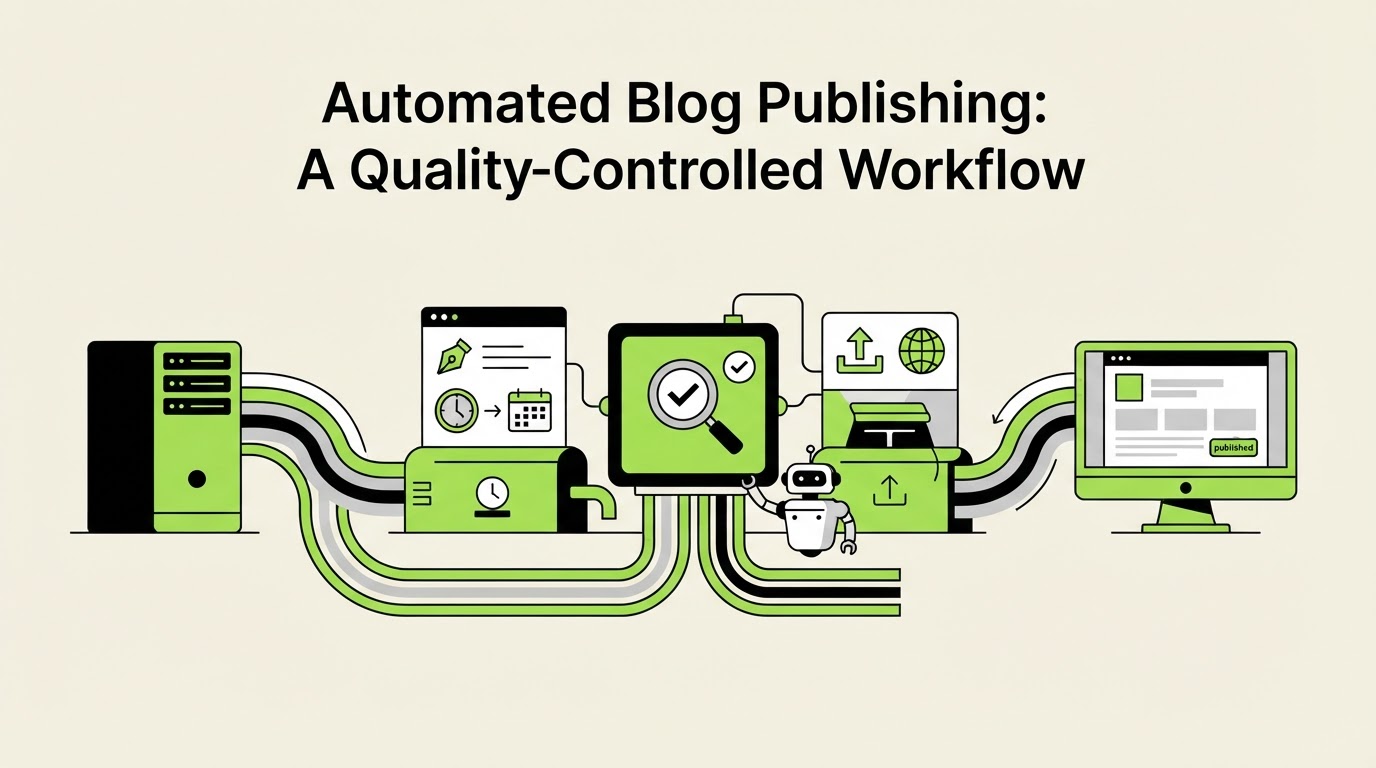
Automated Blog Publishing: A Quality-Controlled Workflow
A practical workflow for automated blog publishing with WordPress, including topic selection, editorial review, technical checks, and Rankdesk publishing steps.

AI Blog Generator for Search-Focused Publishing
Use an AI blog generator to research topics, create useful drafts, apply editorial controls, and publish search-focused articles through a repeatable workflow.

AI Keyword Research and Content Writer for SEO Publishing
Use AI keyword research and writing in one practical workflow: find a viable topic, build a search-focused brief, review the draft, and publish to WordPress.

AI Blog Writer for SaaS: Research, Write, and Publish Content That Ranks
A practical workflow for using an AI blog writer for SaaS, from topic selection and source review to WordPress publishing and AI search visibility.
AI Content Publishing API: Build a Reliable SEO Workflow
Learn how to connect research, content generation, validation, CMS publishing, and performance monitoring through an AI content publishing API.

Shopify AI Blog Writer: Plan, Write, and Publish SEO Content
Use a Shopify AI blog writer to turn product expertise, competitor research, and keyword data into useful articles that can be reviewed and published directly to your store.

AI Content Writer for Agencies
A practical workflow for agencies that need to research, produce, review, and publish client SEO content without creating an editorial bottleneck.

AI Landing Page Writer for Pages That Rank and Convert
Create landing pages from keyword and competitor research, apply conversion-focused quality controls, and publish through your existing website platform.

WordPress AI Content Writer: Research to Publishing
Use a WordPress AI content writer to research search demand, create useful pages, apply editorial checks and publish through a repeatable workflow.

AI SEO Writer for Research, Writing, and Publishing
Learn how to use an AI SEO writer to research opportunities, create useful articles and landing pages, publish through WordPress, and improve results over time.

AI Content Brief Generator
Build SEO content briefs from search intent, competitor coverage, site data, and publishing requirements, then turn them into pages that can rank and earn AI citations.

Bulk Article Generator for SEO Content at Scale
Learn how to use a bulk article generator to research topics, create distinct pages, run quality checks, publish to WordPress, and track search performance.

Content Marketing Automation Software
See how content marketing automation software turns keyword research, writing, review, publishing, and performance monitoring into one repeatable workflow.

Blog Automation Software: Plan, Write, and Publish
Learn what blog automation software should handle, how to build a reliable WordPress publishing workflow, and where human review still matters.
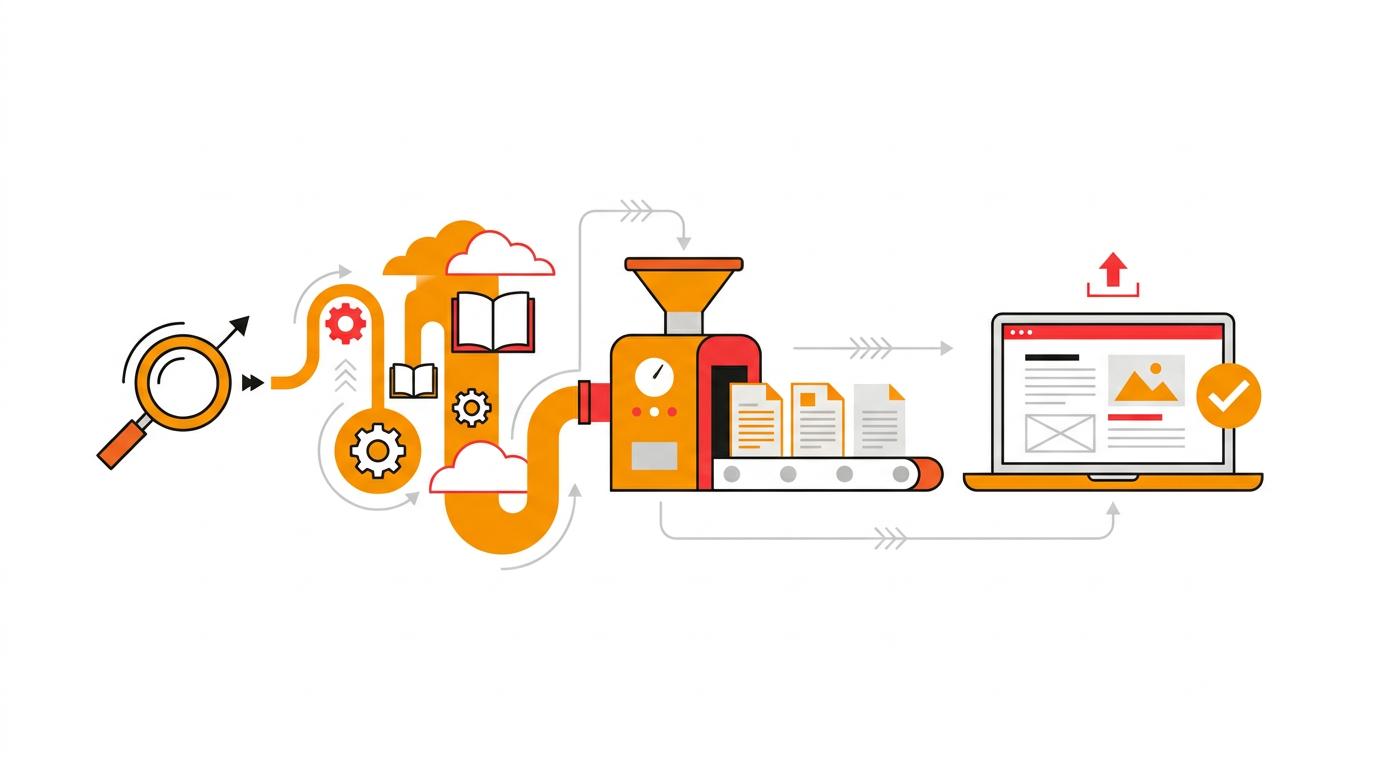
SEO Content Generator: From Keyword to Published Page
Learn how to use an SEO content generator for research, briefing, drafting, editorial review, publishing, and performance measurement.

AI Content Generator for Search-Focused Publishing
Use an AI content generator to turn keyword and competitor research into reviewed, search-focused pages that can be published directly to WordPress and other supported platforms.
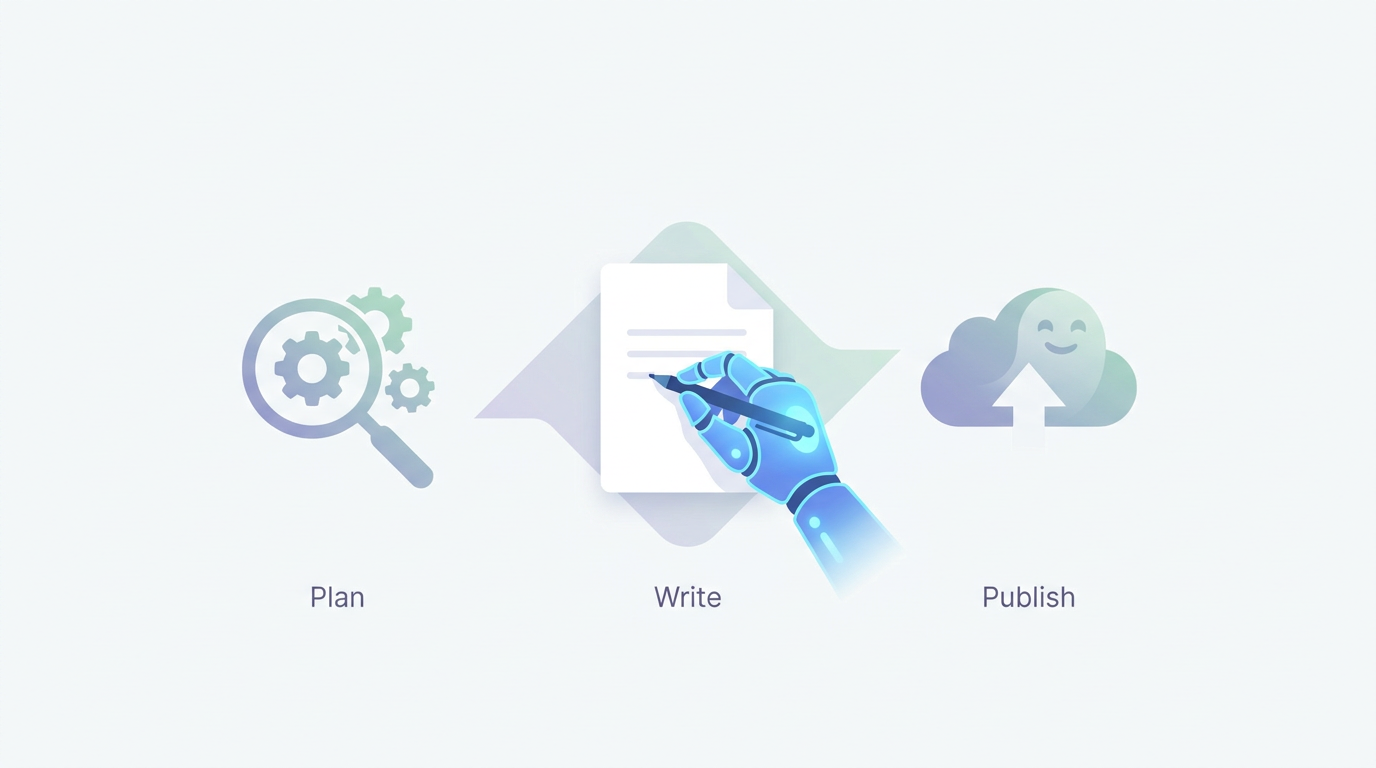
AI Content Writer for Ghost: Plan, Write, and Publish SEO Pages
A practical workflow for researching, writing, reviewing, and publishing search-focused articles and landing pages on Ghost with Rankdesk.

AI Content Writer for WooCommerce: Plan, Write, and Publish
Use a WooCommerce AI content writer to turn product expertise, search demand, and competitor gaps into useful articles and landing pages published through WordPress.

AI Content Writer for Webflow
Learn how to use an AI content writer with Webflow, from keyword mapping and page creation to CMS publishing, internal links, indexing, and AI citations.

Generative Engine Optimization Software
Learn how generative engine optimization software turns keyword research, source-backed writing, review, publishing, and content updates into a repeatable workflow.
Programmatic SEO Software: Plan, Create, and Publish Pages at Scale
Learn how to choose and use programmatic SEO software for research, page creation, quality control, WordPress publishing, and ongoing search improvement.

SEO Automation Software
Learn how SEO automation software turns keyword research, content production, quality checks, and publishing into one repeatable workflow.

Content Automation Software for SEO Publishing
See how content automation software turns keyword research, drafting, review, WordPress publishing, and performance monitoring into one repeatable SEO workflow.

SEO Content Software: Plan, Write, and Publish
Learn how to choose and use SEO content software for research, writing, review, WordPress publishing, ranking measurement, and AI citations.

AI Article Generator: Research, Write, and Publish
Use an AI article generator to turn keyword and competitor research into structured articles, then review and publish them directly to WordPress.
Start auto-writing for your site today
Create a free account, connect your site and generate your first article in minutes. No credit card needed.