

SEO Content Generator: From Keyword to Published Page
A blank document is rarely the real reason SEO publishing stalls. Teams lose time choosing viable keywords, checking competing pages, structuring a useful brief, editing the draft, and moving the finished page into their CMS.
An SEO content generator can handle much of that workflow, but only when research, writing, review, and publishing are treated as connected steps.
SEO content generator quick answer
Use this workflow to turn a search topic into a page that can rank:
- Define the page goal and the search intent it must satisfy.
- Research the keyword, current results, competitors, and existing site coverage.
- Build a brief with a clear angle, structure, internal links, and evidence requirements.
- Generate the first draft using site-specific context rather than a generic prompt.
- Review claims, examples, keyword use, links, and conversion points.
- Publish through your CMS with the correct URL, metadata, and formatting.
- Measure impressions, rankings, clicks, and conversions, then update the page.
Rankdesk's research, writing, and publishing features are built around this complete sequence. That matters because producing a draft is only one part of getting a useful page live.
1. Set a clear goal for the SEO content generator
Start with the page's job. Decide whether it should attract an informational search, compare solutions, support a product category, or convert visitors who already understand the problem.
Consider an illustrative inventory software company with the existing URL example.com/features/cycle-counting. Its team wants to publish example.com/guides/warehouse-inventory-accuracy for operations managers researching ways to reduce stock discrepancies.
The page should explain how inventory accuracy is calculated, identify common causes of mismatches, provide a practical improvement process, and direct qualified readers toward the cycle-counting feature. That is specific enough to guide research and editorial decisions.
Do not ask a generator to “write an SEO article about inventory accuracy.” The instruction omits the audience, intent, business connection, and useful contribution. A polished response to a weak assignment remains a weak page.
2. Research topics before generating SEO content
Review the search results and your own site before drafting. Record what formats currently appear, which subtopics recur, where the results are vague, and whether your site already has a page serving the same intent.
For the warehouse example, research might show that ranking pages explain the inventory accuracy formula but provide little detail about recount thresholds, receiving errors, or corrective action. Those gaps create a better angle than producing another broad definition page.
Check internal coverage too. The proposed guide should support the cycle-counting feature page, not compete with it. Map one primary intent to each URL and choose internal links before generation begins.
Google's Search Essentials explains the technical requirements and core practices that make pages eligible to appear in Google Search. Eligibility does not guarantee rankings, but ignoring crawlability, indexing, or spam policies can stop strong editorial work from being discovered.
For a repeatable research process, use the steps in this guide to automating SEO content creation. Agencies managing several sites can also adapt the client SEO workflow to separate account context and approval requirements.
3. Build a brief your SEO content generator can follow
A useful brief makes editorial decisions before prose is produced. It should specify the reader, page goal, search intent, title direction, required sections, internal links, evidence standards, conversion action, and topics to exclude.
For example.com/guides/warehouse-inventory-accuracy, the brief would require the formula, a worked calculation, causes of inaccurate counts, an improvement process, and a link to /features/cycle-counting. It would also state that the guide must not claim that cycle counting eliminates every discrepancy.
Include original knowledge when you have it. Product teams can supply process details, screenshots, decision rules, or objections heard during sales calls. Editors should flag statements that require subject-matter review rather than allowing the generator to fill gaps with confident guesses.
Google recommends creating helpful, reliable, people-first content. A complete brief supports that goal by requiring direct answers and practical detail instead of chasing a target word count.
4. Generate the SEO draft from specific source material
Generate the page from the approved brief, site context, and research. Keep the first draft focused on coverage and structure. Sentence-level polishing comes later.
In the warehouse guide, the opening should describe a tangible mismatch between recorded and physical stock, then provide the formula quickly. The draft should carry one calculation through the page, such as 9,700 correct records out of 10,000 counted items producing 97 percent inventory accuracy.
Specificity exposes errors. An editor can verify a formula, check whether the example is internally consistent, and remove advice that does not fit the target reader.
This approach works for articles and commercial landing pages. It can also support programmatic SEO landing pages, but scale increases the risk of duplication. Each generated page needs a distinct intent, meaningful source data, and enough unique value to justify its own URL. Changing a city or product name across hundreds of near-identical pages is not a sound strategy.
5. Review SEO content before it reaches the CMS
Treat generation as a draft stage. Check factual statements against approved sources, confirm that examples work, and read the page aloud for repetitive wording.
For the inventory article, verify the calculation and remove any unsupported claim that a particular process will produce a guaranteed accuracy level. Confirm that the cycle-counting link is relevant where it appears. Then inspect the title, H1, headings, metadata, and URL together.
Use this editorial sequence:
- Verify claims, calculations, dates, product details, and quotations.
- Remove repeated sections and generic paragraphs.
- Check that the main question is answered near the top.
- Confirm that internal links match the destination page's purpose.
- Add a clear next step for readers with commercial intent.
- Compare the final page with the original brief.
Over-optimization is a common failure mode. Exact-match phrases inserted into every heading make the copy harder to read and rarely add information. Use the main topic where it clarifies the page, then write naturally.
6. Publish generated SEO pages correctly
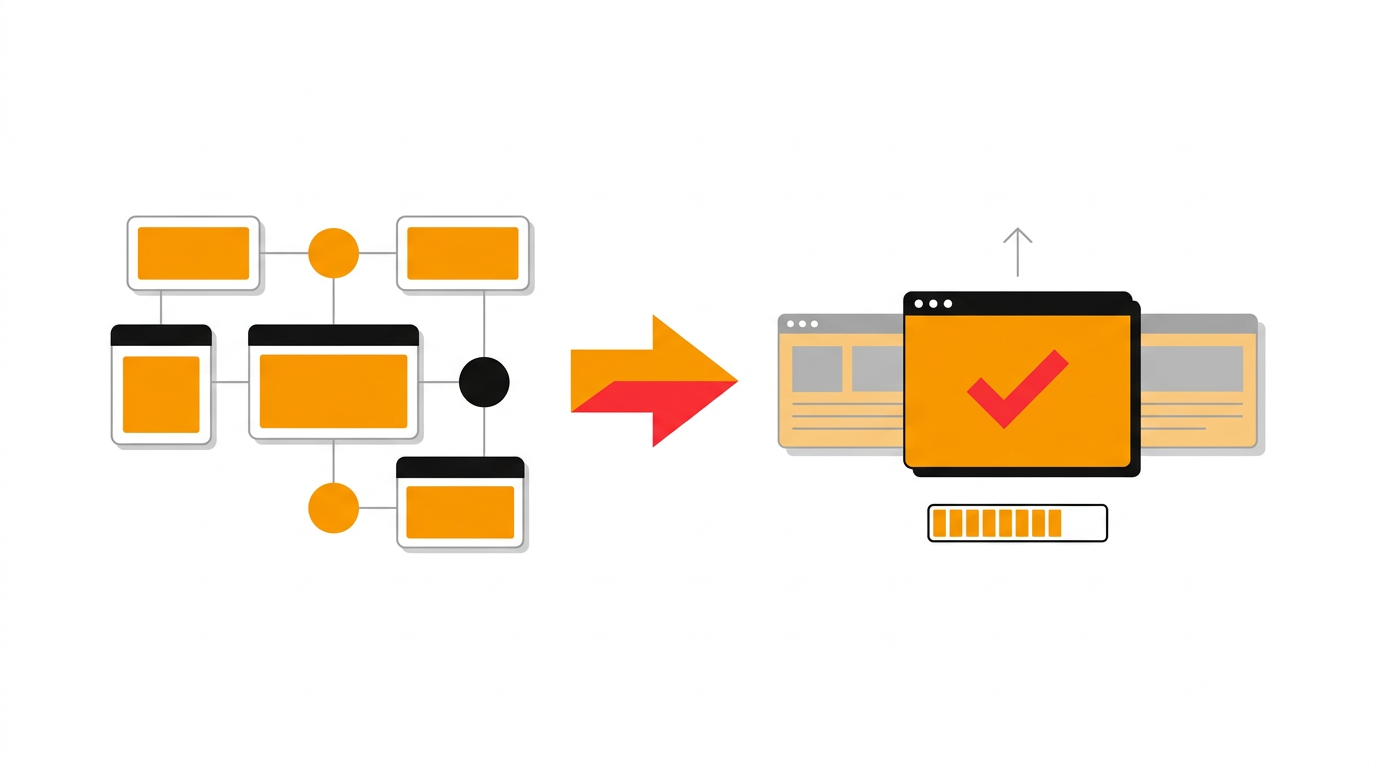
Publishing requires more than pasting body copy into a CMS. Set the slug, title tag, meta description, canonical URL, heading hierarchy, link destinations, and publication status. Preview the page before it goes live.
For the example, use a readable slug such as /guides/warehouse-inventory-accuracy. Avoid changing the URL after publication unless the old address is redirected correctly. Check that the feature-page link does not point to a staging domain or redirect chain.
WordPress teams can connect Rankdesk through its supported publishing workflow. Review the available Rankdesk integrations for WordPress, Shopify, and Lovable, then choose whether pages should wait for approval or be published automatically. WordPress documents how posts and pages are handled through its REST API, which is useful context when checking CMS permissions and publication behavior.
Automatic publishing is best suited to stable workflows with approved templates and clear review rules. Use manual review for regulated subjects, new product claims, or pages that rely on specialist judgment.
7. Measure results from the SEO content generator
Measure the published URL rather than counting drafts. Record the publication date, intended query group, page type, internal links, and conversion action. Then review indexing, impressions, average position, clicks, and qualified actions over time.
The warehouse guide may gain impressions for formula-related searches but few visits to the cycle-counting feature. That result suggests a conversion or intent issue, not necessarily a writing problem. The team could improve the transition from diagnosis to process, clarify the feature link, or add a more relevant example.
Update pages when search intent changes, product details become outdated, or performance data reveals missing coverage. Do not rewrite a page every week because rankings fluctuate. Collect enough evidence to identify a real issue first.
Visibility in AI assistants requires similar discipline. ChatGPT, Claude, and other answer systems are more likely to have useful material to work with when a page is accessible, specific, well-structured, and supported by clear evidence. No generator can guarantee a citation. The practical steps in Rankdesk's guides explain how to improve the chance of being mentioned by ChatGPT and how generative engine optimization software fits alongside standard search work.
How Rankdesk works as an SEO content generator
A generator that stops after drafting leaves research, CMS entry, and scheduling with your team. Rankdesk connects those stages so published output, rather than document creation, becomes the operating unit.
First, Rankdesk researches your site, competitors, and keywords. This supplies context for choosing topics and reduces the need to rebuild the same background in separate prompts.
Next, it creates search-focused articles and landing pages. Review the output when the subject needs approval, product knowledge, or legal scrutiny. The Rankdesk workflow from onboarding to publication shows how these stages fit together.
Finally, approved pages can be sent to a supported platform, including WordPress. Teams with mature editorial rules can automate publication, while teams that need closer control can review pages before they go live.
In the warehouse example, the topic connects to an existing feature page, the guide is produced around a defined intent, and the finished article is published to the selected CMS. The team then has a live URL to measure and improve. This research-to-publication chain is the central operating principle behind Rankdesk.
SEO content generator options compared
Choose based on the amount of workflow you need to remove. A generic text tool can help with drafting, but it may still leave several handoffs between keyword selection and publication.
| Approach | Research context | Editorial control | CMS publishing | Best fit |
|---|---|---|---|---|
| Manual writing workflow | Gathered separately by the team | Full control at every step | Manual | Low publishing volume or specialist subjects |
| General-purpose generation tool | Supplied through individual prompts | Depends on the operator | Usually copied manually | Occasional drafts and ideation |
| Rankdesk | Site, competitor, and keyword research within the workflow | Review before publication when needed | Automatic publishing to supported platforms | Consistent articles and landing pages across an ongoing SEO plan |
Outrank and RankPill are also considered by teams comparing automated SEO platforms. Evaluate current product details directly with each vendor, including supported publishing platforms, review controls, usage limits, and pricing. For a focused comparison, read Rankdesk versus RankPill and check Rankdesk pricing for current plan information.
Common SEO content generator mistakes
Publishing too many overlapping pages is one of the most expensive errors. If three URLs answer the same question for the same reader, consolidate the plan before generating more copy.
Weak source material causes another problem. A detailed prompt cannot supply proprietary product knowledge, reliable customer insight, or evidence that the business has never documented. Give the system approved facts and mark uncertain claims for review.
Do not automate publication before checking a sample in the live CMS. Formatting can break, internal links can point to the wrong environment, and metadata can be truncated. Publish one controlled page first. Inspect it on desktop and mobile, then expand the schedule.
Finally, do not judge the system only by how quickly it writes. Compare the full time from topic selection to an indexed, reviewed URL. The SEO automation software guide covers the broader operational decisions behind that measurement.
SEO content generator FAQ
Can an SEO content generator publish directly to WordPress?
Yes, if the platform supports WordPress publishing. Rankdesk supports WordPress as well as Shopify and Lovable. Confirm permissions, publication status, formatting, metadata, and links with one test page before enabling a larger automated schedule.
Will generated SEO pages rank on Google?
No tool can guarantee rankings. Results depend on search intent, competition, site authority, technical accessibility, content quality, internal linking, and how well the page satisfies readers. A generator improves execution speed and consistency, but it does not remove those requirements.
Can generated pages earn citations from ChatGPT or Claude?
They can become eligible source material, but citations are not guaranteed. Publish crawlable pages with direct answers, identifiable entities, original examples, accurate claims, and supporting evidence. Keep important pages updated and strengthen the site's broader authority rather than optimizing for one assistant in isolation.
Should every generated article be reviewed by a person?
Review is advisable when a page contains product claims, calculations, legal or medical information, time-sensitive details, or brand-sensitive language. Automatic publication is more appropriate after templates, source material, and quality standards have been tested across representative pages.
Can I use an SEO content generator for landing pages?
Yes. Define the audience, commercial intent, offer, proof requirements, objection handling, and conversion action before generation. Landing pages need stronger product context than informational articles. Avoid creating large sets of thin pages that differ only by one keyword or location.
If you want a more consistent way to research, write, and publish search-focused pages, see how Rankdesk works. It researches your site, competitors, and keywords, then creates articles and landing pages you can review or publish automatically. Read next: Bulk Article Generator for SEO Content at Scale. Read next: AI Content Brief Generator.
Start auto-writing for your site today
Create a free account, connect your site and generate your first article in minutes. No credit card needed.