

AI SEO Writer for Research, Writing, and Publishing
Publishing more pages does not fix weak research, mismatched search intent, or generic writing. It can make the problem worse by filling your site with URLs that attract no qualified traffic and give search engines little reason to trust the source.
An AI SEO writer should connect research, writing, review, publishing, and measurement. Rankdesk supports that workflow without forcing teams to move copy between disconnected tools.
How to use an AI SEO writer
The practical workflow has seven steps:
- Audit your existing site and identify coverage gaps.
- Choose a keyword with clear search intent and business relevance.
- Research competing pages and create a specific brief.
- Draft the article or landing page around the required answer.
- Verify claims, links, structure, and differentiation.
- Review and publish the page through your CMS.
- Measure search performance and refresh the page when needed.
Each step affects the next. If the keyword is wrong, a polished draft will still miss the audience. If the research is thin, the page will repeat information already available elsewhere.
To make the process concrete, this page follows a fictional B2B software company with an existing URL at example.com/inventory-management-software. The company wants to strengthen that commercial page and create a supporting guide at example.com/blog/reduce-warehouse-stockouts.
What an AI SEO writer should do before drafting
Start with the site, not a blank prompt. Review existing URLs, products, audience language, internal links, and pages that already receive relevant impressions.
For the example company, the first check reveals that the commercial inventory page explains features but does not answer how warehouse teams prevent stockouts. Publishing another broad inventory software article would create overlap. A focused guide about reducing stockouts can support the existing page instead.
Export the last 90 days from Google Search Console first. The platform's official performance report documentation explains how queries, pages, countries, and devices are reported. Use those dimensions to find URLs with impressions but weak alignment, not merely pages with low clicks.
Run the URL through Rankdesk's SEO checker and review the wider site with the site check tool. Look for duplication, missing topic coverage, weak titles, poor internal linking, and pages serving the same intent.
Do not automatically replace an existing URL. Updating the current page may preserve useful links and search history. Create a new page when the intended reader, query, and page purpose are genuinely different.
How AI SEO writing starts with search intent
A keyword is useful only when its likely visitor could benefit from the page and take a relevant next step. Volume alone is a weak filter.
The example company could target a broad phrase about inventory management, but that would mix definitions, courses, templates, and software. The supporting guide instead focuses on reducing warehouse stockouts. It has a practical problem-solving intent and creates a natural route to the commercial software page.
Classify the intended page before writing. A comparison needs alternatives and decision criteria. A how-to guide needs ordered instructions and failure points. A landing page needs a defined buyer, capability evidence, objections, and a direct action.
Check the live results manually. Search result pages can expose mixed intent that keyword labels miss. If the ranking pages are mostly templates and calculators, a long explanatory article may be the wrong format.
How an AI SEO writer researches competing pages
Competitor research should identify what a page must answer and where existing results remain vague. It should not produce a rewritten average of the first ten results.
For the warehouse guide, review how ranking pages define stockouts, which causes they prioritize, whether they include reorder-point calculations, and how they connect operational advice to software. Record unsupported claims and sections that avoid implementation details.
The resulting brief should specify the primary reader, page intent, required questions, useful examples, internal links, sources, and conversion path. Rankdesk's guide to using competitor research with an AI content writer shows how to turn that analysis into a working brief rather than a list of copied headings.
Follow Google's guidance on helpful, reliable content when deciding what belongs in the draft. A page needs original value for its intended reader. Length and keyword repetition do not provide that value.
How to draft with an AI SEO writer without publishing generic copy
Give the AI SEO writer constraints that reflect the business. For the stockout guide, provide the target reader, inventory terminology, supported product capabilities, approved internal URLs, desired action, and claims that require sources.
The draft should answer the core problem near the top. It can then explain demand variability, inaccurate stock records, supplier lead times, safety stock, and reorder points in the order a warehouse manager would address them.
Add details unavailable from search results. Use product documentation, support questions, interviews with operators, and internal subject-matter reviews. If the company cannot verify that its software calculates safety stock automatically, remove the claim. Plausible wording is not evidence.
Programmatic landing pages need the same discipline. A location, industry, or integration variable must change the substance of the page, not just its title. Review the programmatic SEO software workflow before generating a large page set.
How to review AI SEO writing before publishing
Treat every generated draft as unverified until a person reviews it. Check factual statements, product capabilities, quotations, dates, legal implications, and external links.
Then inspect the page as an editor. The introduction should answer the query quickly. Headings should describe real sections. Examples should remain consistent. Internal links must help the reader continue, not function as keyword containers.
Use this review standard for the example page:
- Confirm the stockout and reorder-point explanations with an operations specialist.
- Link the guide to the existing inventory software page with a descriptive anchor.
- Remove claims that are not supported by company documentation or an authoritative source.
- Check that the guide and commercial page target different intents.
- Add a clear next step for readers evaluating inventory software.
- Preview the title, description, canonical URL, and mobile layout.
A common failure mode is approving pages in bulk because the first few drafts looked acceptable. Templates can repeat the same error across every URL. Sample pages from different topic groups before approving a large publishing run.
How to use an AI SEO writer with WordPress
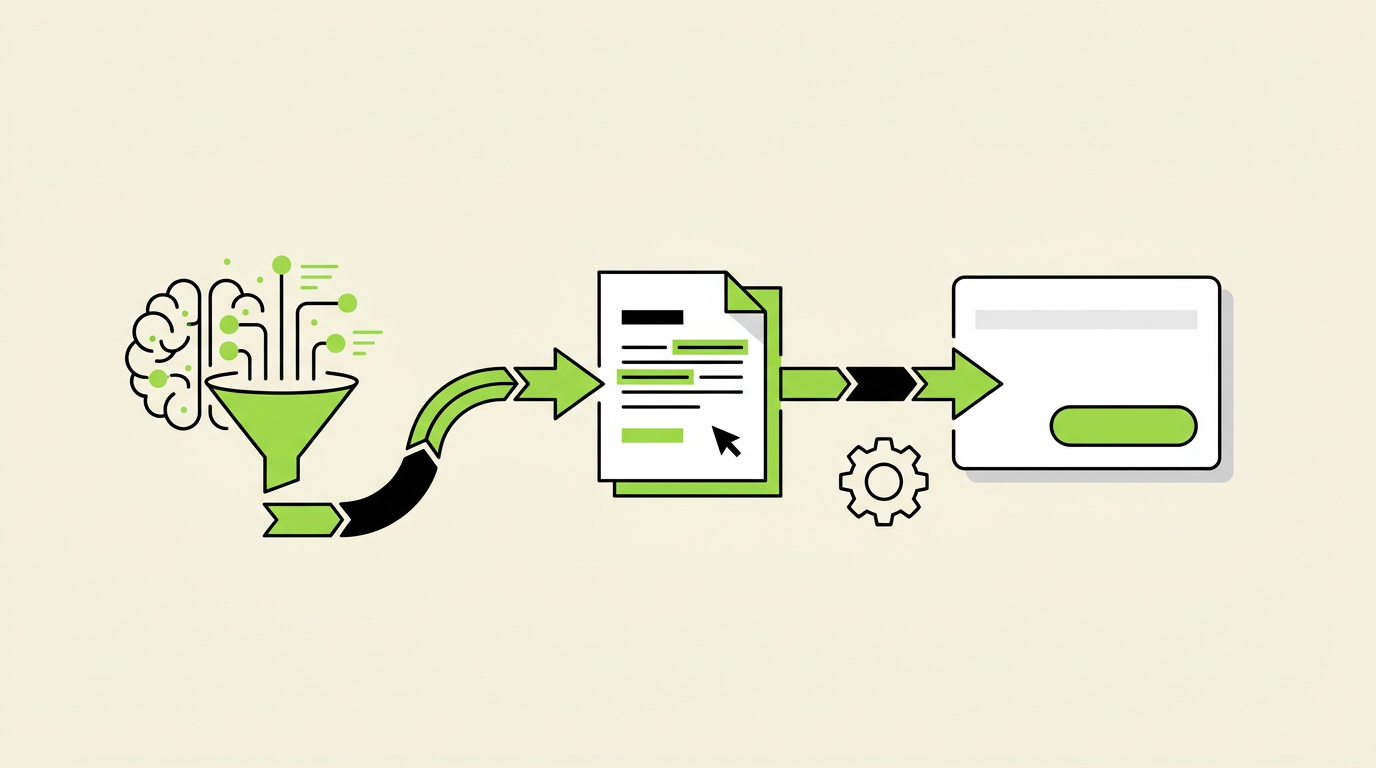
Once the warehouse guide is approved, connect the publishing workflow to WordPress rather than pasting it into the editor manually. Rankdesk provides a dedicated WordPress integration, along with options for other supported platforms.
Map the title, slug, body, meta fields, author, category, featured image, and publication status. Publish the first page as a draft. Check its formatting inside the actual theme because tables, callouts, heading margins, and code can render differently from a writing interface.
Set example.com/blog/reduce-warehouse-stockouts as the final slug before publication. Add a link from the guide to example.com/inventory-management-software, then add a contextual link back from the commercial page if it helps prospective buyers understand the operational problem.
Automated publishing saves repetitive work, but instant publication reduces editorial control. Teams working in regulated subjects should keep a mandatory approval stage. Lower-risk content can use sampling and scheduled review queues. The detailed guide to automated blog publishing risks and controls explains where automation needs human checks.
How Rankdesk handles the AI SEO workflow
A manual workflow often starts with keyword exports, moves into search result tabs and documents, and ends with someone formatting copy in a CMS. Rankdesk removes several of those transfers.
The workflow begins with research into your site, competitors, and keywords. You use those findings to create search-focused articles or landing pages. Review the output where editorial control is required, then publish automatically through a supported integration or keep the page in review.
For the warehouse example, the user first brings the site and topic into the research process. The resulting page is created around the stockout problem, not a generic inventory definition. After review, it can move to WordPress through the configured connection. The team retains the choice to approve it before publication.
The Rankdesk process covers the complete sequence, while the features page shows the available research, creation, and publishing capabilities.
| Workflow area | Generic text generator | Manual SEO workflow | Rankdesk AI SEO writer |
|---|---|---|---|
| Starting input | User prompt | Separate exports and documents | Site, competitor, and keyword research |
| Main output | Standalone draft | Briefs and drafts across several tools | Search-focused articles and landing pages |
| Editorial control | Copy and revise elsewhere | Fully controlled but labor-intensive | Review before publishing when required |
| CMS publishing | Usually manual | Manual or separately configured | Automatic publishing through supported integrations |
| Best fit | One-off drafting | Small volume or strict custom processes | Repeatable research-to-publishing workflows |
Outrank and Rankpill are alternatives teams may evaluate. Compare actual workflow coverage, supported publishing destinations, review controls, and current pricing rather than counting generated words. Rankdesk provides separate on-site comparisons for workflow and integration differences with Outrank and differences with Rankpill.
How AI SEO content earns rankings and AI assistant citations
No AI SEO writer can guarantee a ranking or a citation from ChatGPT, Claude, or another assistant. Search visibility depends on relevance, quality, accessibility, competition, links, and the systems used by each platform.
Make the page technically accessible and useful without hiding the answer behind scripts or registration. Follow Google Search Essentials for baseline indexing and spam requirements. If visibility in OpenAI search features matters, check the official OpenAI crawler documentation before blocking or allowing relevant crawlers in robots.txt.
Citations are more likely to be useful when a page states specific facts clearly, supports them with evidence, identifies the responsible publisher, and stays current. Add author or company context where appropriate. Update stale claims and broken sources.
For the warehouse guide, the company should publish a precise reorder-point explanation, state any assumptions, and link to a primary source where needed. A vague paragraph written to mention every inventory phrase offers little citation value. Rankdesk's guide on getting mentioned by ChatGPT covers the broader accessibility and authority work.
Common mistakes with an AI SEO writer
The most damaging mistake is scaling before proving the workflow. Ten reviewed pages reveal problems cheaply. Hundreds of published pages make cleanup slower and can weaken site quality.
Another mistake is letting the tool invent product differentiation. Supply approved facts and reject unsupported benefits. Also avoid creating several URLs for minor keyword variations. Consolidate them when one page can satisfy the same reader and intent.
Finally, do not stop at publication. Recheck Search Console after the page has had time to be discovered and indexed. Compare impressions, queries, clicks, and the performance of the linked commercial page. Update the title or opening only when the data suggests an intent mismatch. Do not rewrite a page every week based on normal fluctuations.
FAQs about AI SEO writers
Can an AI SEO writer replace an SEO specialist?
It can reduce research, drafting, formatting, and publishing work. A specialist is still valuable for site architecture, prioritization, technical diagnosis, editorial standards, link strategy, and decisions based on incomplete data.
Can I publish AI-written pages directly to my website?
Yes, but the right approval level depends on risk. Product, financial, medical, and legal claims need strict review. For lower-risk informational pages, use templates, validation rules, and sampled editorial checks before enabling broader automation.
Does Google penalize AI-written content?
Google evaluates whether content is helpful and whether it violates spam policies, not whether a particular drafting tool was used. Thin, repetitive, or misleading pages remain risky regardless of how they were created.
Can an AI SEO writer create landing pages as well as blog posts?
Yes. The input must reflect commercial intent. Define the audience, problem, capability, proof, objections, and conversion action. See the practical process for an AI landing page writer before scaling similar pages.
How many pages should I publish each month?
There is no universal number. Start with the volume your team can research, verify, publish, and maintain. Increase output after the first group is indexed correctly, meets editorial standards, and supports real business topics.
Choosing an AI SEO writer for your workflow
Choose based on the work surrounding the draft. Check whether the platform researches your site and competitors, creates the page types you need, supports review, and connects to your CMS. Confirm that your team can correct output before it reaches customers.
A standalone generator may be sufficient for occasional drafts. Rankdesk is better suited to teams that want one repeatable process for research, articles, landing pages, review, and publishing across supported platforms.
If you want a more consistent AI SEO workflow, see how Rankdesk works. It researches your site, competitors, and keywords, then creates search-focused articles and landing pages you can review or publish automatically.
Start auto-writing for your site today
Create a free account, connect your site and generate your first article in minutes. No credit card needed.