
Rankdesk vs Outrank: Features, Integrations, Publishing, and Pricing
September 5, 2026
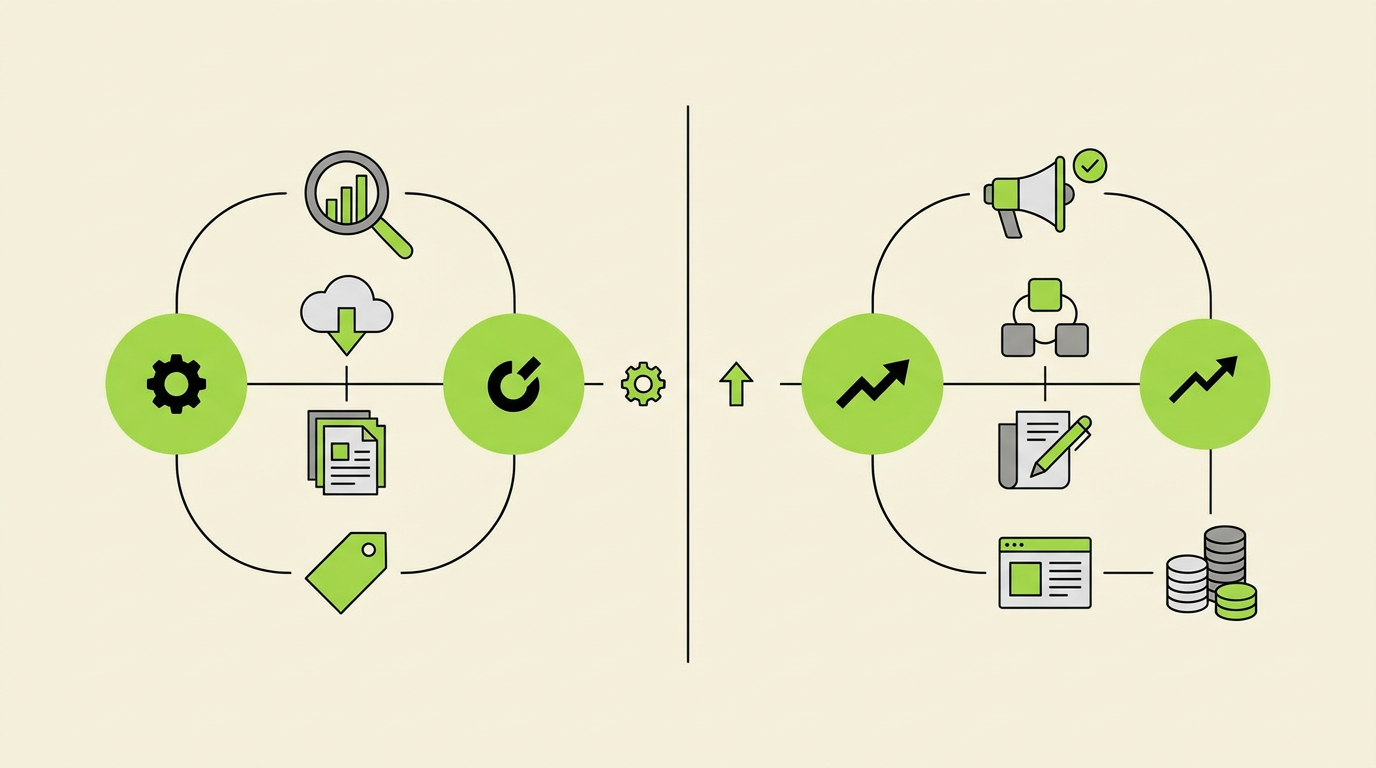
A content platform can produce polished drafts and still create more work than it removes. Research may be disconnected from the website, publishing may require manual formatting, and pages may target keywords that the site has no realistic chance of ranking for.
Rankdesk and Outrank both address SEO content production, but they should be compared as operating systems for the whole workflow, not only as drafting tools. Rankdesk is the stronger fit for teams that want site research, competitor analysis, articles, landing pages, broad publishing options, and explicit AI search optimization in one process. Outrank is worth considering when automated article production is the main requirement and its available connections match your stack.
Quick answer: how to choose between Rankdesk and Outrank
Use this sequence to make the decision without getting distracted by draft demos:
- Define whether you need articles, landing pages, AI citations, or all three.
- Compare how each platform researches your site, competitors, and keywords.
- Test content creation against one real brief and editorial standard.
- Verify the exact CMS integration and automated publishing controls you need.
- Assess how each product supports visibility in Google and AI assistants.
- Calculate the full operating cost, including review and publishing labor.
- Run both platforms on the same small topic cluster before committing.
Rankdesk vs Outrank comparison table
The following comparison focuses on workflow differences that affect day-to-day use. Product capabilities and plans can change, so confirm any feature that is essential to your buying decision.
| Decision area | Rankdesk | Outrank | What to verify in a trial |
|---|---|---|---|
| SEO research | Researches the site, competitors, and keywords as part of the workflow | Centers its offer on automated SEO research and content production | Whether recommendations reflect your existing pages and authority |
| Content formats | Supports search-focused articles and landing pages | Primarily positioned around SEO article generation | Whether the required format is native or needs manual adaptation |
| Publishing | Supports review before publishing and automated publishing | Offers automated publishing workflows | Draft states, scheduling, URL control, updates, and rollback options |
| Integrations | Provides CMS-specific options plus API and webhook routes | Provides publishing connections that should be checked against your stack | Authentication, field mapping, metadata, and image handling |
| AI visibility | Has a dedicated AI search optimization focus | SEO production is the clearer core use case | Whether the workflow improves source quality rather than merely mentioning AI assistants |
| Pricing comparison | Current plans are available on Rankdesk's pricing page | Check Outrank's own pricing page for current plan details | Usage limits, sites, articles, seats, integrations, and overages |
This table identifies what to inspect, but it cannot replace a live workflow test. A feature labeled “WordPress integration,” for example, says nothing about how custom fields, author accounts, categories, redirects, or editorial approvals are handled.
Rankdesk vs Outrank: start with the outcome you need
Consider a fictional B2B analytics company called Northstar Metrics. Its website runs on WordPress, has 85 existing articles, and sells reporting software through pages such as /product/marketing-reporting/. The team wants to publish eight useful articles per month and build landing pages for specific reporting use cases.
It also wants its brand and original documentation to appear as sources when people ask ChatGPT or Claude about marketing reporting methods. That requirement changes the evaluation. Producing eight drafts is only one part of the job.
Write down the deliverables before opening either product. For Northstar Metrics, those deliverables are six educational articles, two commercial landing pages, internal links to relevant product documentation, WordPress draft publishing, and a monthly review of pages that need updating.
Rankdesk fits this mixed requirement because its workflow covers both articles and landing pages while connecting research, production, publishing, and AI search optimization. Outrank may still fit a team focused mainly on scaling SEO articles. The choice depends on whether its workflow covers the additional page types and controls you actually need.
Do not score vague promises. Score completed tasks.
Rankdesk vs Outrank for SEO research
Good automation starts by understanding what the site already covers. If a tool treats every keyword as a new-page opportunity, it can create duplicate articles that compete with established URLs.
Northstar Metrics already has /blog/marketing-dashboard-guide/. During the comparison, a suggested article titled “How to Build a Marketing Dashboard” looks attractive because the topic has commercial relevance. Publishing it as a new URL would split internal links and topical signals across two similar pages. The better recommendation is to update the existing guide or target a narrower need that is not currently answered.
Test whether each platform identifies that conflict. Enter the real domain, export the proposed topics, and compare them with current URLs in Google Search Console. Google explains in its Search Essentials that useful, crawlable content and clear signals help pages become eligible to appear in search. A keyword list alone does not provide those conditions.
Rankdesk researches the website, competitors, and keywords before producing pages. That joined-up context is useful when the site already has a meaningful content library. Its site check tool can also provide an initial view before a larger workflow is configured.
For Outrank, inspect the evidence behind each recommendation. Ask whether the system distinguishes a missing topic from an underperforming existing page. Review competitor inputs too. A competitor ranking for a broad term does not mean your site should copy its page structure or pursue the same intent.
For a practical treatment of the complete research-to-publication sequence, Rankdesk's guide to automating SEO content creation explains how the stages connect.
Rankdesk vs Outrank for content creation
A useful content test needs more than a prompt and a first draft. Give both platforms the same source material, target reader, search intent, required examples, prohibited claims, and internal pages. Then review the output as an editor would.
Northstar Metrics tests a brief for /blog/monthly-marketing-report-template/. The page must explain data collection, show a reporting structure, link to the marketing reporting product page, and avoid claiming that one template works for every business. It also needs to distinguish a monthly management report from a channel-level dashboard.
The first failed draft sounds polished but repeatedly defines basic marketing terms. It does not explain which metrics belong in an executive summary or how reporting changes when attribution data is incomplete. That failure matters because surface quality can conceal weak subject coverage.
Rankdesk supports articles and landing pages, which makes it better suited to Northstar Metrics' mixed publishing plan. A team can use related research for an educational guide and a commercial use-case page without forcing both into the same article template. Review the available Rankdesk features against your required page types and approval process.
When testing Outrank, check whether the result can be shaped beyond standard blog structures. Teams planning programmatic landing pages should inspect title patterns, unique evidence, URL conventions, duplicate sections, and calls to action. Generating hundreds of similar pages is technically easy. Keeping them distinct and useful is not.
Google's spam policies for web search warn against scaled content created primarily to manipulate rankings, regardless of whether automation or people produced it. Human review does not rescue a page with no original purpose. Require specific examples, accurate claims, clear sourcing, and a reason for each page to exist.
Rankdesk vs Outrank integrations and automated publishing
Publishing is where apparently similar products often separate. A basic integration may create a WordPress post, while a production-ready connection must also handle the slug, title, meta description, author, category, featured image, canonical settings, links, and draft status.
Northstar Metrics initially enables automatic publication for the template article. The draft reaches WordPress, but the team notices that its product link points to a staging URL copied from an old brief. The article has not failed as prose. The publishing process has failed because no validation caught a high-impact field.
Start with draft mode. Map every required field, publish to a test category, and inspect the rendered page on mobile and desktop. Check the HTML rather than relying only on the visual editor. Confirm heading order, tables, image alt text, outbound link attributes, and structured data produced by the theme.
Rankdesk lists direct options for platforms including WordPress, Webflow, Shopify, Ghost, Wix, Framer, and several headless content systems. API and webhook routes are available for less conventional setups. That breadth is relevant to agencies managing multiple clients because integration requirements rarely stay uniform.
Outrank also promotes automated publishing, but buyers should verify the exact connection rather than assuming all CMS integrations work alike. Ask what happens when a post update fails, whether existing URLs can be updated safely, and whether publishing can be restricted by site, role, or content type.
Automation should remove copying and formatting. It should not remove accountability.
Rankdesk vs Outrank for Google rankings and AI visibility
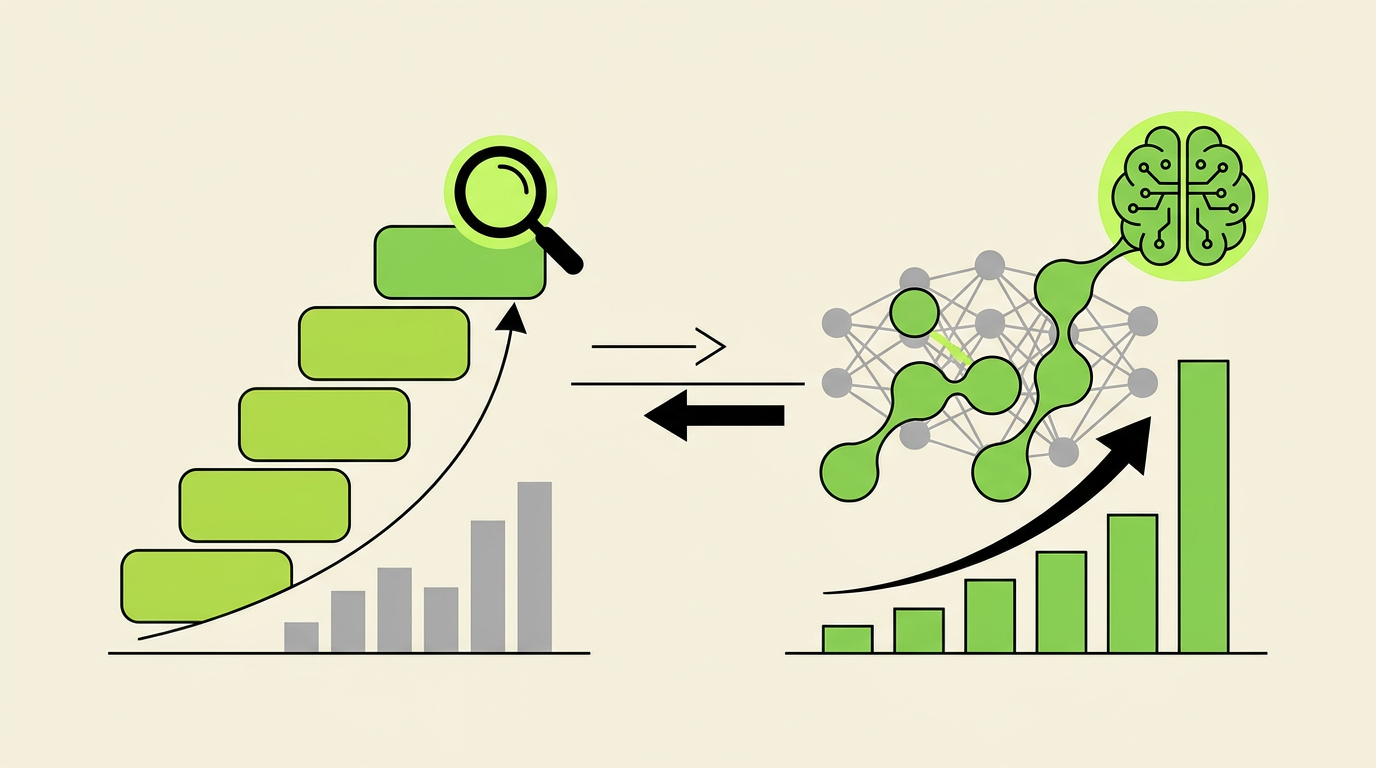
Ranking in Google and earning citations from AI assistants overlap, but they are not identical goals. Both benefit from accessible pages, strong topical relevance, direct answers, clear entities, and claims that can be traced to reliable evidence. AI assistants may also select sources that state a useful fact compactly enough to quote.
For Northstar Metrics, publishing another general article about marketing reports is unlikely to establish the company as a source. A better page includes a precise monthly reporting framework, definitions tied to the product's documentation, examples of incomplete attribution, and an updated methodology section. Those elements provide quotable material.
Rankdesk explicitly addresses visibility in AI search as part of its product positioning. This suits teams that want to plan content for both conventional results and assistant-generated answers. The practical work still requires substance. No platform can guarantee that ChatGPT or Claude will mention a particular brand.
Outrank should be evaluated on the same standard. Look past labels and inspect whether its recommendations improve source clarity, entity consistency, factual support, and answer structure. Ask how it handles updates when terminology, products, or source material changes.
Structured data can help machines understand certain page elements, provided the markup matches visible content. Schema.org documents the shared vocabulary used for structured data, but markup is not a substitute for a credible page. Add it only where the page and CMS support it correctly.
Rankdesk's practical guide on how to get mentioned by ChatGPT covers the wider work involved, including source quality and content structure.
How Rankdesk handles the workflow from research to publishing
The clearest way to understand Rankdesk is to follow Northstar Metrics through one production cycle.
The team begins by connecting its website context and reviewing research across the existing domain, competitors, and target keywords. It rejects the duplicate marketing dashboard idea and selects the monthly reporting template because it fills a narrower gap.
Next, Rankdesk creates the article around that selected opportunity. The editor checks the reporting framework, removes an unsupported generalization about attribution, and adds a link to the appropriate product page. A companion landing page can be prepared for a commercial reporting use case without pretending that it serves the same intent as the educational article.
The team then uses the WordPress connection. During the first cycles, every page goes to draft status. Editors inspect metadata, links, categories, and rendered formatting. Once the field mapping and review rules have proved reliable, low-risk content can move to scheduled or automatic publishing while commercially sensitive pages retain approval.
After publication, the workflow returns to the site rather than ending with a document. Existing coverage informs later topics, and pages can be assessed for updates instead of creating a fresh URL each time. This is the work Rankdesk removes: moving research between tools, rebuilding briefs, copying content into the CMS, and repeatedly formatting the same fields.
See how Rankdesk works for the product sequence and available publishing path.
Rankdesk vs Outrank pricing and total operating cost
Do not compare subscription prices without comparing included work. Check the current Rankdesk pricing and Outrank's own pricing page on the same day, since vendors can change plans, limits, and billing structures.
Record the number of websites, users, articles, landing pages, research runs, and publishing connections included. Check whether usage resets monthly, whether unused capacity carries over, and what happens when a limit is reached. Agencies should also inspect workspace separation and client access.
Then add labor. If a lower-priced tool requires an editor to move every draft into WordPress, rebuild tables, add metadata, and repair internal links, the subscription comparison is incomplete. Measure minutes per approved page during the trial. Use the actual salary or contractor rate paid by your organization, not an assumed industry average.
Northstar Metrics finds that editorial review takes roughly the same effort for both trial drafts. Its deciding cost factor becomes landing-page support and WordPress handling because those tasks otherwise return to the internal team. Another business could reach a different result if it only needs articles delivered to a single CMS.
How to test Rankdesk vs Outrank before choosing
Run a controlled test with three URLs: one new informational article, one update to an existing article, and one commercial landing page. Use the same source packet and acceptance criteria in both products.
For Northstar Metrics, the test includes /blog/monthly-marketing-report-template/, an update to /blog/marketing-dashboard-guide/, and /solutions/agency-reporting/. The existing-page update is essential because it shows whether the platform can work with a mature site rather than always proposing new production.
Track the recommendation quality, unsupported claims, editing time, internal-link accuracy, CMS corrections, and final page usefulness. Keep ranking changes out of a short trial score. Search performance takes time and can be affected by indexing, competition, links, seasonality, and site changes unrelated to the platform.
Leave automatic publication disabled until both systems pass the draft test. A reasonable progression is test environment, CMS draft, scheduled post, and only then restricted automatic publishing. Preserve a rollback process at every stage.
Agencies comparing this workflow across clients can also use the operational checks in Rankdesk's guide to scaling client SEO without sacrificing quality.
When outside implementation support belongs in the comparison
Software selection is sometimes only part of the project. A company may have an older CMS, unclear analytics ownership, several regional sites, or no internal person responsible for validating metadata and publishing fields. In that situation, include implementation work in the Rankdesk vs Outrank evaluation from the start.
Document the current stack, required content types, approval roles, analytics events, and the person who can authorize production access. This makes it easier to separate a platform limitation from an internal configuration problem. It also exposes hidden work such as cleaning old categories, standardizing author profiles, or deciding which team owns redirects.
Teams that want external help assessing or implementing digital systems can include a provider such as EasyX in that planning process. The provider still needs the same concrete brief. Avoid asking for a generic “SEO automation setup.” Specify the CMS, fields, approval stages, test URLs, failure alerts, and handover documentation required.
Keep platform ownership inside the company even when outside support is used. An internal owner should understand credentials, workflows, publishing permissions, and rollback steps. That prevents a useful automation project from becoming dependent on undocumented configuration.
Common mistakes in a Rankdesk vs Outrank comparison
The first mistake is choosing from a generated draft. Most products can produce an impressive sample when the subject is broad and the evaluation ends before publication. Test the research decision and CMS output too.
The second is counting pages instead of accepted pages. A plan that permits more production has little value if duplicate intent, weak evidence, or formatting defects cause most pages to be rejected.
The third is enabling automatic publishing immediately. Northstar Metrics' staging link illustrates how a small input error can reach a public page. Validate fields in draft mode first.
The fourth is treating AI citations as a switch. Better formatting can improve clarity, but assistants choose sources independently. Original facts, maintained documentation, direct answers, and a technically accessible site remain necessary.
Finally, avoid selecting a platform only for the current CMS. Consider the next likely requirement, such as a headless rebuild, a second client site, landing-page production, or stricter editorial permissions. Do not pay for hypothetical needs, but make sure the workflow will not break as soon as the content program grows.
Rankdesk vs Outrank FAQ
Is Rankdesk better than Outrank?
Rankdesk is the better choice when you need connected site research, articles and landing pages, multiple publishing options, and a defined focus on AI search visibility. Outrank may suit a team whose main requirement is automated SEO article production and whose CMS is supported. Test both against your real workflow before deciding.
Can Rankdesk and Outrank publish directly to WordPress?
Both should be evaluated for WordPress publishing, but support must be tested beyond creating a basic post. Check custom fields, metadata, categories, authors, images, links, draft status, updates, scheduling, and failure handling. Rankdesk provides a dedicated WordPress integration page and also supports API or webhook routes for custom requirements.
Can either platform guarantee ChatGPT or Claude mentions?
No. A platform can help create clear, useful, well-structured pages and improve the workflow used to maintain them. It cannot control which sources an AI assistant selects for a particular answer. Treat any guaranteed mention claim with caution.
Should automated SEO pages be published without human review?
Not at the beginning. Use human approval while testing research quality, factual accuracy, internal links, metadata, and CMS rendering. After the process proves reliable, automatic publishing can be limited to lower-risk page types. Product, legal, medical, financial, or reputation-sensitive claims should retain appropriate review.
Does automated content violate Google's rules?
Automation itself is not the deciding factor. Google's policies focus on content produced primarily to manipulate rankings and pages that offer little value. Whether people or software produced the first draft, each page needs a legitimate purpose, useful information, accurate claims, and proper technical implementation.
What is the best Rankdesk vs Outrank pricing comparison method?
Compare current plan limits and then measure the internal labor required to move one accepted page from research to publication. Include editing, formatting, metadata, image handling, CMS entry, and quality checks. The lower subscription price can cost more overall if it leaves several manual stages untouched.
If you want a more consistent way to research, create, and publish search-focused articles and landing pages, see how Rankdesk supports the full workflow. You can review the output before publishing or automate approved workflows once your quality controls are proven.
Want articles like this on your site?
Rankdesk plans, writes and publishes SEO content for you. Start free and generate your first 3 articles.