
AI Search Optimization Tool
A content calendar can look busy while search traffic stays flat. Teams often publish broad articles, miss the service pages that drive qualified leads, and leave their best existing URLs without updates as search behavior changes.
An AI search optimization tool gives that work a repeatable system. Rankdesk helps teams research their site, competitors, and keywords, then turn the findings into articles and landing pages that can move through review and publishing.
How to use an AI search optimization tool
Use this workflow to create content that serves Google searchers and gives AI assistants clear, usable source material.
- Audit your existing pages, rankings, and topic gaps before selecting new topics.
- Choose one search intent and map it to the page type that best answers it.
- Build a source-backed brief with specific questions, entities, and internal links.
- Create a useful page, then add first-hand detail, clear headings, and evidence.
- Publish through your CMS, monitor performance, and refresh pages that stall.
How an AI search optimization tool finds the right content opportunities
Start with pages already close to producing results. Export the last 90 days from Google Search Console and sort queries by impressions, then look for URLs ranking around positions 8 through 20. These pages often need a stronger answer, tighter intent match, or better internal support.
Next, separate opportunities by purpose. A comparison query needs decision criteria. A local service query needs service specifics, location relevance, and a clear conversion path. An informational question needs a direct answer with useful supporting detail. Publishing several pages for the same intent splits relevance and creates editorial waste.
Google's guidance on helpful, reliable content emphasizes people-first material with clear expertise and purpose. Use that as the editorial standard when reviewing any generated draft.
Consider a WordPress site for a Phoenix plumbing company. Its /water-heater-repair/ page receives impressions for “water heater leaking from bottom” and “emergency water heater repair Phoenix,” yet the page ranks on the second page. The team first planned a generic article about water heaters. The better decision is to strengthen the service page with leak causes, urgent safety actions, repair-versus-replacement factors, service-area information, and links to related repair pages. A supporting article can then cover the broader diagnostic question and point readers back to the service page.
This is where keyword research becomes a page-planning exercise. The goal is a useful URL architecture, not a spreadsheet full of phrases.
How to create content for Google rankings and AI citations
AI assistants commonly surface pages that answer a specific question directly, define terms clearly, and support claims with credible sources. Build each page around a question the reader can recognize, then answer it near the top in plain language.
For the plumbing example, the supporting article could open with the immediate steps a homeowner should take when a tank leaks. It could then explain common causes, signs that justify urgent service, expected inspection steps, and when replacement may be practical. A licensed technician can add observations from real calls, such as the difference between a small fitting leak and corrosion at the tank base. That experience creates content a generic draft cannot supply.
Use a consistent evidence structure:
- State the answer before the background explanation.
- Attribute technical or safety claims to an authoritative source.
- Include precise service, product, or process details from the business.
- Link to the relevant commercial page when readers need help.
- Update the page when regulations, product information, or search demand changes.
Structured data can help search engines interpret page details. Google's structured data introduction explains how markup describes page content and supports eligibility for certain search features. Validate markup and keep it aligned with visible copy.
For a deeper editorial framework, read how to get mentioned by ChatGPT. The same discipline applies across AI assistants: useful answers, identifiable expertise, accurate facts, and pages that are easy to parse.
What to check before publishing AI search content
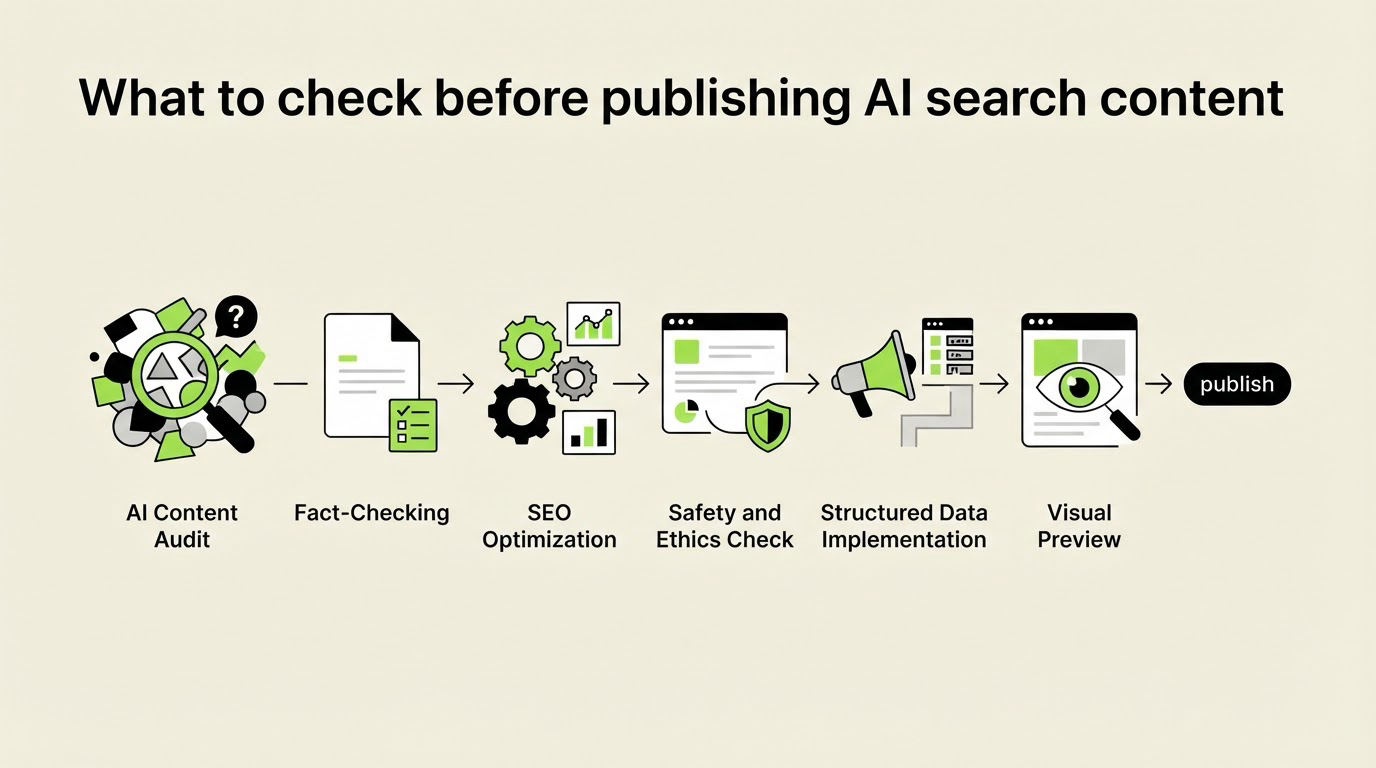
A fast draft can still introduce factual errors, duplicated intent, weak claims, or a conversion path that fails the reader. Review each page against the search result it aims to serve.
| Review area | What to verify | Phoenix plumbing example |
|---|---|---|
| Search intent | The page answers the primary task behind the query | Leak diagnosis article answers immediate homeowner questions |
| Business accuracy | Service claims, areas, and processes match operations | Emergency availability reflects actual dispatch coverage |
| Evidence | Technical claims have dependable support | Safety advice references manufacturer or public safety guidance |
| Internal links | Links guide readers to the next relevant page | Article links to water heater repair and replacement pages |
| Conversion path | A ready-to-act reader has a clear next step | Call option and booking route appear after urgent guidance |
Keep publishing controls in place. Hold pages for human review when they cover health, legal, financial, safety, or location-specific claims. The same review level helps with heavily competitive commercial topics, where vague copy rarely earns trust or rankings.
See the full process in this guide to automating SEO content creation, including how to keep editorial review in the workflow.
How Rankdesk supports AI search optimization on WordPress
A WordPress team can run this workflow inside Rankdesk without treating content production as a disconnected writing task. Begin by setting the site context and selecting the topic opportunity. Rankdesk can research the site, competitors, and keyword landscape to shape the page direction.
Next, create the article or landing page around the defined intent. Review the proposed structure against the existing WordPress URLs so the new page has a clear role. For the plumbing example, the team would choose a supporting diagnostic article, preserve the service page as the conversion destination, and specify links between both pages.
Then edit the draft with operational details: the neighborhoods served, the conditions that require an immediate call, and the repair process the company actually follows. This stage is where the brand earns its credibility. Send the completed page through the publishing path after review, using the Rankdesk WordPress integration when WordPress is the CMS.
After publication, return to the queries and landing pages that created the opportunity. Improve the opening answer, add missing subtopics, or consolidate overlapping pages where needed. Rankdesk's AI search optimization approach connects research, writing, and publishing so that cycle is easier to run consistently.
Teams managing larger content queues can also use the process described in AI content autopilot with quality controls. The useful outcome is a managed publishing rhythm with decisions still tied to intent and accuracy.
How to measure results from an AI search optimization tool
Track results at the URL and query level. Sitewide traffic can hide whether a new page answered the target search better than the page it supports.
For the Phoenix plumbing example, measure impressions, clicks, average position, leads from the service page, and the assisted path from the diagnostic article to the booking page. Check the first 30, 60, and 90 days, then prioritize changes based on actual search queries. A page gaining impressions with few clicks may need a clearer title and opening. A page earning clicks without leads may need a better internal route to the relevant service.
Also keep an eye on topical coverage. As new questions appear, publish supporting pages only when they add a distinct answer. A focused cluster builds stronger topical signals than a series of near-duplicate posts.
AI search optimization tool FAQs
Can an AI search optimization tool improve Google rankings?
It can improve the process behind rankings by identifying opportunities, organizing research, producing structured drafts, and keeping publishing consistent. Google rankings still depend on content quality, relevance, crawlability, competition, authority, and the value the page provides to searchers.
Can content help a business appear in AI assistant answers?
Useful, clearly structured pages with reliable facts create stronger citation candidates. Build pages around genuine questions, include identifiable expertise, reference authoritative sources when appropriate, and keep details current. No platform can promise inclusion in a specific AI response.
Should WordPress sites publish every generated draft automatically?
Use review gates for pages with claims that affect customers, safety, pricing, compliance, or local availability. Teams can publish lower-risk, well-tested formats faster once the template, internal links, and editorial rules are proven.
What is the best first page to optimize?
Choose a page with visible search demand, a clear business connection, and enough existing evidence to improve. Pages already earning impressions often provide a practical starting point because Search Console reveals the exact language people use.
If your team needs a steadier way to turn search opportunities into reviewed WordPress content, see how Rankdesk works. It researches your site, competitors, and keywords, then creates articles and landing pages for review or automated publishing.