

How to Get Mentioned in ChatGPT
A buyer asks ChatGPT for the best platform, provider, or method in your category, yet your company never appears. Publishing more generic articles rarely changes that outcome because assistants need clear evidence, specific answers, and pages they can access and trust.
Rankdesk helps teams plan and publish search-focused pages that build this evidence over time. Mentions remain probabilistic, but a disciplined content and entity strategy gives ChatGPT stronger reasons to surface your brand.
Quick answer: how to get mentioned in ChatGPT
Use this workflow to improve your chances of appearing in relevant ChatGPT answers:
- Define the buyer questions where a mention would be valuable, then identify the entities and claims each answer requires.
- Publish one definitive, evidence-backed page for each important question or comparison.
- Make your company, products, authors, and claims easy to verify across your site and trusted third-party sources.
- Ensure key pages are crawlable, internally linked, current, and technically sound.
- Build a focused topic cluster, refresh pages as your offering changes, and test the prompts that matter to buyers.
How ChatGPT chooses sources and mentions
ChatGPT responses can draw on information available through search and other sources. The system weighs the user’s wording, the kind of recommendation requested, accessible web information, source quality, and the clarity of the available evidence. A page can rank well for a narrow keyword and still provide too little support for a broad recommendation prompt.
Treat a desired mention as a research problem. If someone asks, “What are reliable content publishing platforms for a small agency?” ChatGPT needs enough context to understand what your product does, who it serves, where it fits, and why the claim is credible.
OpenAI publishes information on how site owners can manage access for its crawlers. Check those controls before investing heavily in content production. A blocked or inaccessible page cannot contribute much to web-based discovery.
Step 1: choose the questions that can earn a ChatGPT mention
Start with commercial questions where your offer has a legitimate place. Avoid vague targets such as “best marketing tool.” Select prompt families tied to a buyer’s job, industry, constraint, or workflow.
For example, a Ghost-based content consultancy called Northline Studio wants to appear when prospective clients ask about publishing regular SEO articles without creating an editorial backlog. Its team selects three focused questions:
- How can a small consultancy publish SEO articles consistently on Ghost?
- What should agencies use to plan, draft, and publish client content?
- How do teams create useful topic clusters for service businesses?
These questions create a practical editorial map. Northline already has a Ghost site, serves agencies, and can explain its own process. It has far less authority to make broad claims about every content platform on the market.
Build a simple claim inventory before writing. List the service, audience, workflow, relevant integrations, proof available, and claims requiring a source. Then assign each claim to a page. This prevents the common failure mode of burying the only useful detail inside a vague product overview.
For a deeper prompt-research framework, see Rankdesk’s practical guide to getting mentioned in ChatGPT.
Step 2: publish source-ready pages that answer the question
A source-ready page answers a narrow question quickly, explains the method, and gives readers enough detail to assess it. Lead with the answer. Follow it with steps, limits, examples, and supporting references where appropriate.
Northline’s first draft was titled “Grow Your Agency Faster With Content.” It made several broad promises and offered no explanation of the Ghost workflow. The revised page became “How Agencies Can Publish SEO Content on Ghost Without an Editorial Backlog.” It included a weekly cadence, editorial review points, examples of article types, and a clear description of who owns approval.
Specificity creates usable context. Include the details a researcher would need:
| Page element | What Northline publishes | Why it supports a potential mention |
|---|---|---|
| Audience | Small agencies managing several client sites | Connects the page to a defined recommendation scenario |
| Workflow | Research, brief, draft, editor review, Ghost publication | Explains how the service operates in practice |
| Constraints | Approval requirements, brand voice, and client accuracy checks | Shows operational judgment instead of generic promises |
| Evidence | Named process steps, current service details, and cited external facts | Gives readers and systems material to assess |
| Next action | A relevant service page and contact route | Lets qualified visitors continue their evaluation |
Use descriptive headings that match buyer language. Write a direct answer in the opening paragraph. Add original process details only your team can provide, such as approval rules, product constraints, decision criteria, and implementation examples.
Where structured data fits the page, follow Google’s structured data guidance. Organization, Article, Product, FAQ, and author information can help machines interpret page elements when the markup accurately reflects visible content.
Step 3: build clear entity signals across your site
ChatGPT needs to connect the company name to a real offering and a real audience. Make that job straightforward.
Give every important entity a stable home: an About page for the company, service or product pages for offers, author pages for expertise, and contact details that match everywhere. State locations, industries, integrations, and capabilities precisely. Keep names consistent across page titles, navigation, profiles, and citations.
Northline found that its homepage called the business a “growth partner,” its About page said “content studio,” and its service page used “Ghost consultants.” The team chose one clear description: “SEO content publishing support for agencies using Ghost.” It retained natural variations in body copy while making the core service consistent.
Authority builds through corroboration. Earn genuine references from relevant industry sites, partners, podcasts, professional directories, and publications. Publish expert material that gives people a reason to cite you. The same work can strengthen organic visibility, and Rankdesk’s guide to increasing domain authority covers the practical link-building side of that effort.
Step 4: make pages available, current, and connected
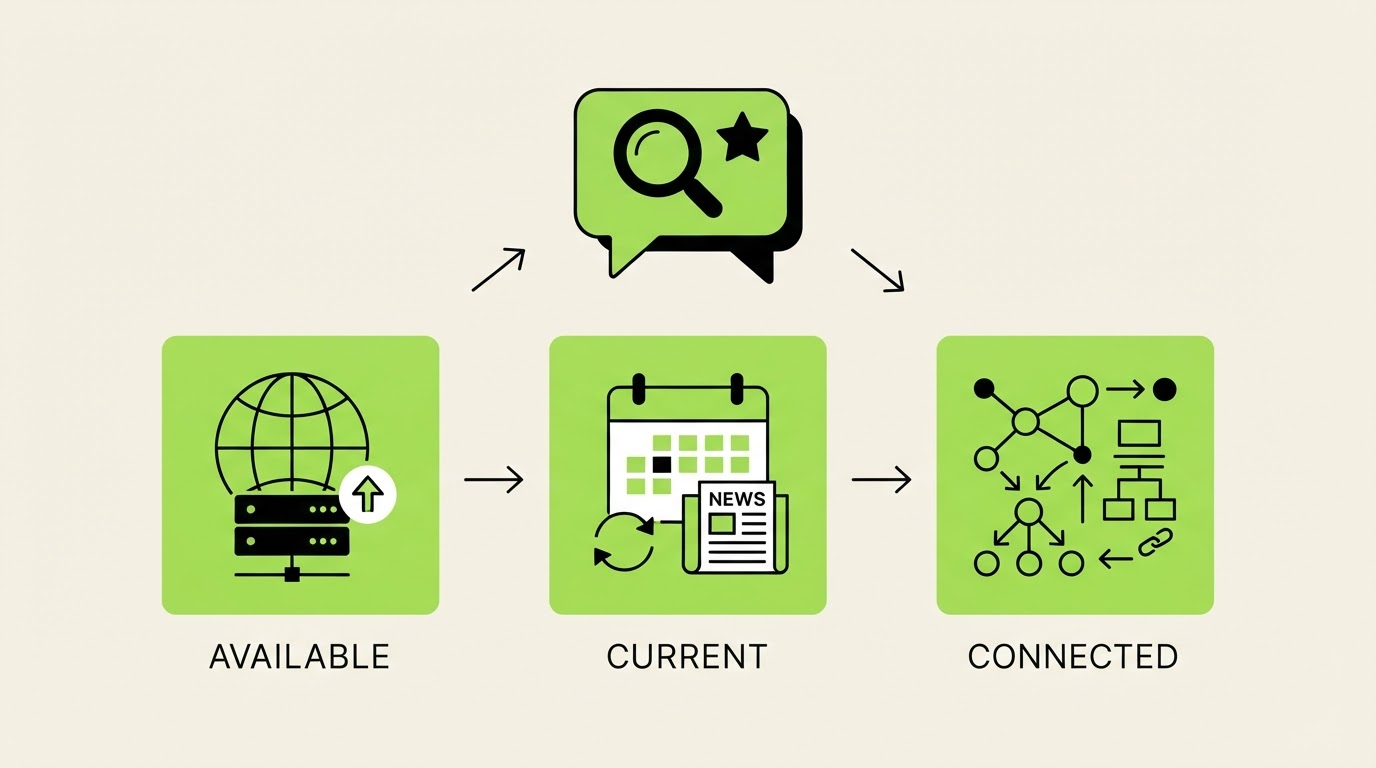
A high-quality article hidden three clicks deep or removed from navigation has limited practical value. Link important pages from relevant service pages, guides, and category hubs. Use descriptive anchors that explain the destination.
For a Ghost site, publish the guide under a stable URL, assign a useful tag, add it to a relevant collection or navigation path, and link to it from service pages. The Rankdesk Ghost integration page explains the supported publishing route for teams using that platform.
Review technical fundamentals monthly. Confirm that key pages return a successful status code, load for users, contain indexable text, and have an accurate canonical URL. Check robots controls and sitemap inclusion after major site changes. Use Google Search Console to inspect indexing and search performance.
Freshness comes from maintenance, not from changing dates. Northline revisits its Ghost guide when its review process, service scope, or platform behavior changes. A stale integration claim damages credibility quickly.
How Rankdesk helps you get mentioned in ChatGPT through consistent publishing
Manual execution works when a team has time to research prompts, map topics, draft pages, coordinate reviewers, and publish on schedule. Rankdesk reduces that operational load while keeping editorial decisions with your team.
Start by entering Northline’s domain and competitors. Rankdesk researches the site, competitors, and keywords to identify topic opportunities around agency content publishing, Ghost workflows, and approval-led SEO production. The team selects opportunities that match its actual service scope.
Next, create a brief that specifies the reader, the buyer question, evidence to include, internal pages to link, and claims requiring editorial approval. Rankdesk creates a draft article or landing page from that direction. The editor adds Northline’s real process details, removes unsupported wording, and checks every external reference.
Then publish to Ghost after review, or use scheduled publishing where the content type and approval rules support it. Link each new guide to a related service page and older relevant articles. This creates a connected body of evidence rather than isolated posts.
Explore how Rankdesk works and its AI search optimization approach to see how research, drafting, and publishing fit into one workflow. Teams that need more operational depth can also use the guide on automating SEO content creation.
Step 5: measure whether your ChatGPT mention strategy is working
Track leading indicators alongside direct prompt checks. Organic impressions, rankings for question-led pages, referral visits, branded searches, earned links, and qualified leads show whether the content is gaining reach and credibility.
Test a small, repeatable set of prompts every month. Record the exact wording, location or account context where relevant, response date, brands named, source links shown, and gaps in the answer. Use that record to find missing pages or weak entity evidence.
Northline tests prompts about Ghost publishing for agencies. Early answers cite generic productivity advice, so the team adds a page explaining its editorial approval workflow and links it to the Ghost guide. Later tests may vary because assistant outputs change. The useful insight comes from repeated patterns, paired with site performance data.
Avoid treating one answer as a scorecard. A single prompt result can shift with wording, available sources, and product updates. Build the body of evidence, then assess trends over a meaningful period.
Common mistakes that prevent ChatGPT mentions
The first mistake is publishing pages that make claims without showing the underlying process. Replace broad statements with concrete methods, boundaries, and examples.
The second is creating ten near-identical pages for tiny wording variations. Consolidate overlapping intent into one strong guide, then support it with distinct pages that serve separate decisions.
The third is relying on automated drafts without review. Every page needs a human check for factual accuracy, product detail, legal or regulated claims, internal links, and source quality. This is especially important for pages that recommend tools, services, or professional decisions.
The fourth is chasing mentions while neglecting site fundamentals. Clear positioning, useful information architecture, crawl access, and credible references create the foundation for both search visibility and assistant citations.
FAQ about getting mentioned in ChatGPT
Can you guarantee a mention in ChatGPT?
No provider can guarantee a mention. ChatGPT responses vary by prompt, source availability, model behavior, and context. Focus on publishing accurate, accessible, well-supported pages that make your business a credible candidate for relevant answers.
How long does it take to get mentioned in ChatGPT?
Timing depends on crawl access, existing authority, the competitiveness of the topic, and the quality of available evidence. New pages may need time to be discovered and corroborated. Publish the core pages first, then build related guides and third-party references over subsequent months.
Does ranking on Google help with ChatGPT mentions?
Strong Google visibility can increase the discoverability of useful pages and often reflects sound content and technical practices. Build for the reader’s question, provide direct evidence, and maintain clear entity information. Those practices support both channels.
Should I create a page for every ChatGPT prompt?
Create pages around meaningful buyer decisions and distinct search intent. A focused cluster of comprehensive guides is easier to maintain and more useful than a large collection of slight variations.
Can Rankdesk publish to Ghost?
Rankdesk supports Ghost as part of its publishing integrations. Review the Ghost publishing option and set editorial review rules that match the accuracy requirements of your business.
If you want a more consistent way to plan, write, and publish pages that support ChatGPT mentions, see how Rankdesk works. It researches your site, competitors, and keywords, then creates articles and landing pages for review or automated publication.