
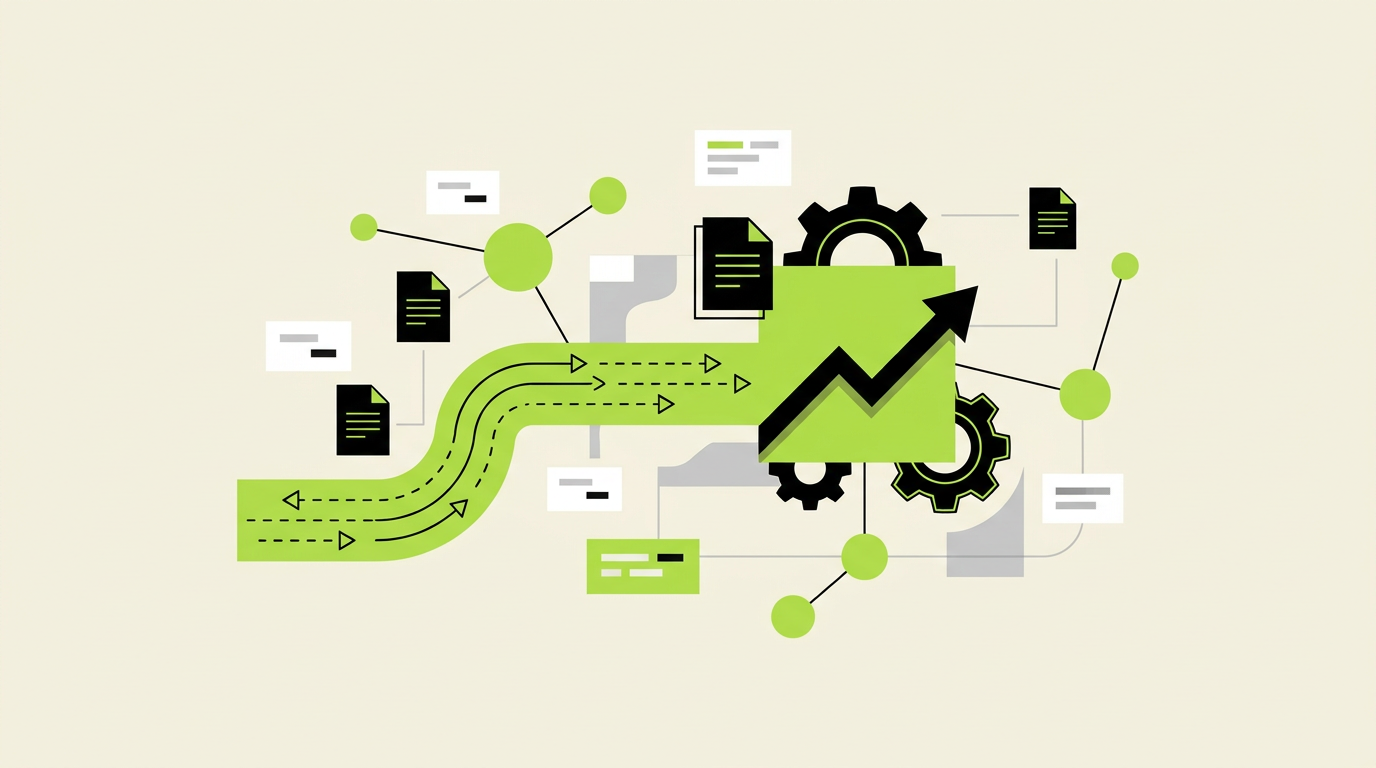
AI Content Publishing API: Build a Reliable SEO Workflow
Generating an article is easy. Publishing it with the correct URL, metadata, internal links, formatting, status, and tracking is where automated workflows often break.
An AI content publishing API connects content production to your CMS or custom stack through a controlled, repeatable handoff. Rankdesk supports this workflow by combining search research, content creation, review, and publishing options in one system.
Quick answer: how to use an AI content publishing API
Use this workflow to move from a keyword or brief to a published, measurable page:
- Choose the publishing endpoint and define the content schema.
- Send the keyword, page type, audience, and site context.
- Generate the article or landing page with structured metadata.
- Validate the response against editorial and technical rules.
- Create or update the CMS entry with an idempotent request.
- Publish, confirm the live URL, and submit it for discovery.
- Track indexing, rankings, citations, and content changes.
The API should not simply return a block of text. It should provide enough structured information for your publishing system to make safe decisions.
Choose an AI content publishing API endpoint and schema
Start with the destination. Decide whether your application will create a draft in WordPress, send an entry to a headless CMS, commit a file to a repository, or call an internal publishing service.
For a running example, consider a plumbing website using a custom Next.js stack. The team wants to publish /guides/emergency-plumber-cost after editorial approval. The page needs a title, slug, meta description, introduction, sectioned body, FAQ, canonical URL, author reference, and publication status.
A useful API response for this page would separate those fields rather than burying everything in one HTML string. Your schema might include title, slug, metaTitle, metaDescription, content, status, and updatedAt. If the CMS stores FAQs or calls to action as separate blocks, include those as discrete objects too.
Version the schema from the start. Adding a field later is simple. Changing the meaning of an existing field can break every downstream publisher.
The API contract should also specify field types, required properties, character limits, accepted markup, and error responses. For teams using JSON over HTTP, the HTTP semantics standard provides the authoritative definitions for methods, status codes, and request behavior.
Rankdesk can connect to a custom stack through its API integration, while teams running a JavaScript application can review the dedicated Next.js integration.
Send useful inputs to the content publishing API
A keyword alone is not a sufficient production brief. The request needs to describe what the page must accomplish and what evidence the system should use.
For the plumbing guide, the input should identify homeowners as the audience, explain that prices vary by location and callout conditions, and require a clear distinction between service fees and repair charges. It should also provide relevant existing URLs so the new guide supports the site rather than competing with another page.
Include these fields where your implementation permits them:
- Primary topic and closely related questions
- Search intent and intended page type
- Audience, service area, or product category
- Existing pages to reference or avoid duplicating
- Brand facts and claims that may be stated
- Required conversion action
Do not send unsupported prices, awards, certifications, or customer results as loose notes. Store approved facts in a controlled source and pass only current records into the request.
Competitor research can help identify missing subtopics, but it should not become an instruction to reproduce another page. The practical process in Rankdesk is covered in its guide to using competitor research in content production.
Generate structured SEO articles and landing pages
The generation stage should return publishable components, not an unreviewed wall of copy. Articles usually require headings, explanatory paragraphs, internal links, FAQs, metadata, and a specific next action. Programmatic landing pages may also need location, category, or product variables.
For /guides/emergency-plumber-cost, the response could include sections covering callout fees, common repair types, factors affecting the final bill, questions to ask before approving work, and signs that a quote lacks important detail. The conversion action might point readers to a local service booking page.
Keep facts separate from presentation when possible. The CMS can render FAQ markup, author details, or reusable conversion blocks consistently. This reduces formatting drift across hundreds of pages.
Automated production also needs duplication controls. If the site already has /services/emergency-plumbing, the new guide should explain costs and buying considerations rather than target the same service intent. Similar titles are a warning, but the real check is whether both pages answer the same search need.
Teams producing location or category pages should review the programmatic SEO landing page workflow before increasing volume.
Validate AI content before publishing through the API
Validation needs two layers. Machine checks catch predictable defects, while editorial review catches weak reasoning, misleading claims, and awkward positioning.
The plumbing example fails validation if its meta title exceeds the CMS limit, the slug already exists, or the body contains an internal link to a staging domain. Those are deterministic errors. Reject the payload automatically.
A human editor should then verify whether the guide gives useful cost context without presenting unsupported figures as universal facts. They should also check whether the page reflects how the business actually handles emergency calls.
Google states that generative AI can support useful content, but producing many pages without adding value may violate its spam policies. Its guidance on generative AI content makes the quality standard clear: automation does not remove the publisher's responsibility.
Use a consistent gate before publication. Rankdesk's pre-publishing quality checklist covers the editorial and SEO checks that are easy to miss when output volume increases.
Publish API content without creating duplicates
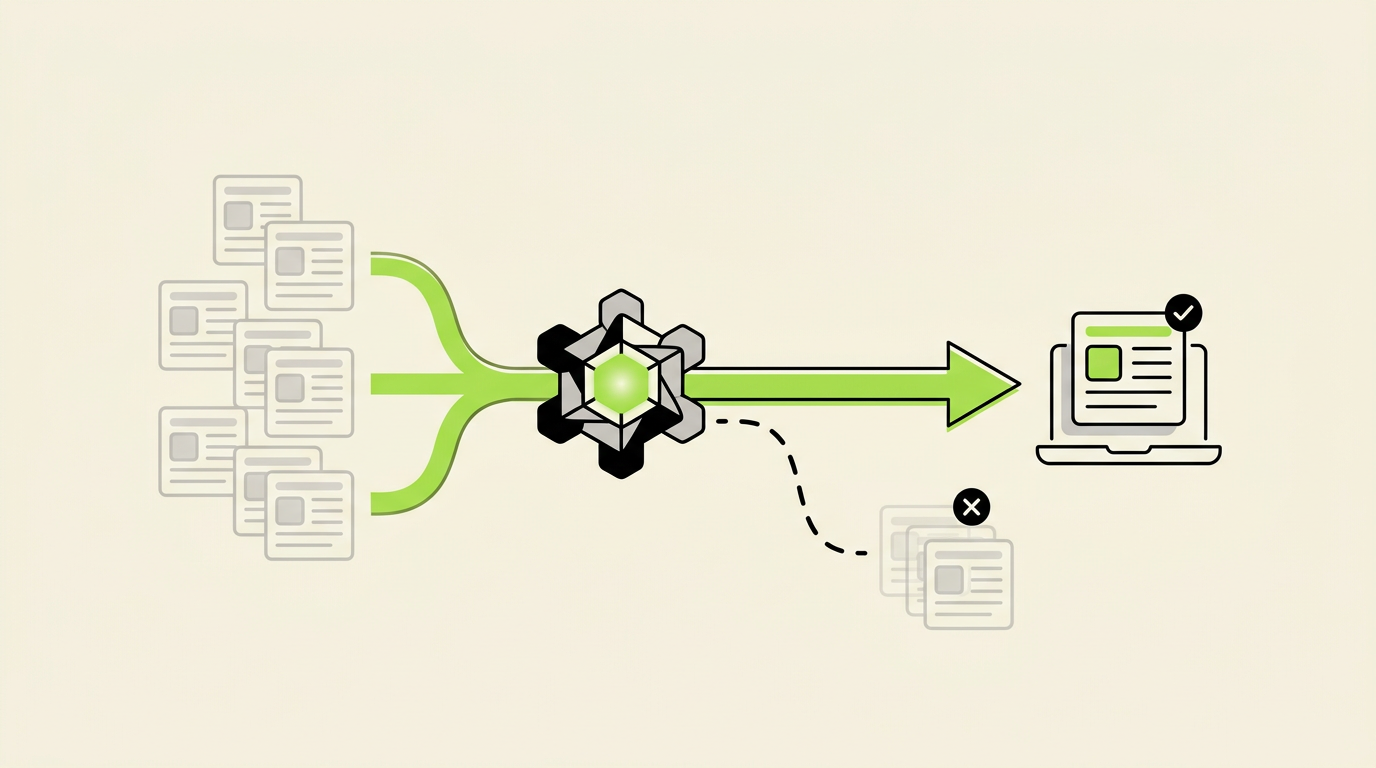
The publishing request should be idempotent. Retrying it must not create a second page.
Assign each content job a stable external ID. Before creating /guides/emergency-plumber-cost, query the CMS for that ID or canonical slug. If the record exists, update the intended revision. If it does not, create a draft.
This approach matters when a request times out after the CMS has saved the record but before it returns a success response. A blind retry can create /emergency-plumber-cost-2, split internal links, and leave editors unsure which version is canonical.
Different publishing methods offer different levels of control:
| Publishing method | Best fit | Main advantage | Main risk |
|---|---|---|---|
| Direct CMS API | Established CMS with stable fields | Fast draft creation and updates | Field mapping can break after CMS changes |
| Webhook | Event-driven internal systems | Keeps publishing logic inside your stack | Requires reliable retry and signature handling |
| Repository commit | Static or Next.js sites | Full version history and code review | Builds may delay publication |
| Manual export | Low publishing volume | Maximum editorial control | Slow and difficult to scale |
Publish to draft status first until the workflow has handled enough real cases to earn trust. Automatic publication is appropriate when the source data is controlled, validation is strict, and rollback is tested.
Rankdesk also provides a webhook integration for teams that want their own application to receive and process publishing events.
Confirm indexing and measure content performance
A successful API response does not mean the page is discoverable. Confirm that the live URL returns the expected status, contains the canonical tag, appears in the correct navigation or internal-link structure, and is eligible for indexing.
Add eligible URLs to the sitemap and update the modification date only when the page has materially changed. Google's sitemap documentation explains supported formats and submission methods.
For the plumbing guide, record the content job ID, CMS entry ID, live URL, publication time, target topic, and revision number. That record lets the team connect rankings or conversions to the exact version that was published.
Track whether the URL is indexed, which queries produce impressions, whether visitors reach the booking page, and whether later edits improve performance. For AI assistant citations, monitor mentions manually or through an appropriate tracking process, but do not treat publication as a guarantee of inclusion. Clear sourcing, distinct expertise, and consistent entity information improve eligibility.
The guide on earning mentions from ChatGPT explains the entity and content work that supports this objective.
How Rankdesk handles the AI content publishing workflow
A custom workflow requires research scripts, prompt management, schema validation, CMS mapping, retry handling, and reporting. Rankdesk removes much of that coordination while preserving a review point.
First, Rankdesk researches the site, competitors, and keywords so the proposed page has context. For the plumbing example, that means identifying the intended search need and checking how the guide relates to existing service pages.
Next, it creates a search-focused article or landing page. The result can be reviewed before publication rather than being sent live as an unchecked text response.
After approval, the content can move through a supported CMS integration or a custom API connection. A team using WordPress can use the WordPress integration, while a custom Next.js stack can retain its own rendering and deployment rules.
This workflow keeps research, production, and publication connected. It also reduces the chance that an editor approves one version while an older export reaches the site.
Rankdesk is built for teams that need repeatable publishing rather than isolated text generation. Review how Rankdesk works to see where research, approval, and delivery fit into the process.
Common AI content publishing API failures
The most damaging failures are often operational rather than grammatical. A valid article can still cause problems if the system sends it to the wrong content type, overwrites a hand-edited page, or publishes without required attribution.
Watch for silent truncation when CMS fields have smaller limits than the API schema. Preserve editor changes by storing revision identifiers and rejecting updates based on stale versions. Log the sanitized request, response status, content ID, and retry count without exposing credentials.
Security also matters. Keep API keys outside source code, grant only the permissions required for the publishing task, rotate credentials, validate webhook signatures, and restrict which content types the integration may modify.
Set a rollback path before enabling automatic publication. For a static site, that may be a reverted commit. For a CMS, it may be a stored prior revision that an editor can restore immediately.
AI content publishing API FAQ
Can an API publish directly to WordPress?
Yes, provided the workflow has authenticated access and maps the generated fields to the correct WordPress post type. Start by creating drafts. Confirm categories, authors, featured media, metadata, and canonical behavior before enabling automatic publication.
Should generated content publish without human review?
Only when inputs are controlled, validation is comprehensive, and the content carries low factual or legal risk. Medical, financial, legal, and safety-related pages require qualified review. Most teams should begin with mandatory approval and relax it only for proven templates.
Can I use the same API for articles and landing pages?
Yes, but use separate schemas or an explicit page-type field. A service landing page needs conversion sections and reusable business facts, while an article usually needs deeper explanation, citations, and editorial metadata.
Does automated publishing help content rank faster?
It reduces the delay between planning and publication, but speed alone does not improve rankings. The page still needs useful information, sound technical delivery, internal links, authority, and ongoing updates based on performance.
Can published pages get cited by ChatGPT or Claude?
They can, but no publishing API can guarantee citations. Create crawlable pages with specific claims, clear sourcing, consistent brand information, and genuine subject expertise. Maintain those pages when facts change.
If you want a more consistent way to research, create, review, and publish through an API or supported CMS, see how Rankdesk supports search-focused publishing. It creates articles and landing pages from your site, competitor, and keyword context, then lets you review them or publish automatically.
Start auto-writing for your site today
Create a free account, connect your site and generate your first article in minutes. No credit card needed.