
AI Blog Writer for Ecommerce: Create Content That Supports Products and Categories
September 25, 2026

An ecommerce blog can bring in qualified shoppers, yet many articles stop at traffic because they never lead readers to the category or product that solves their problem. Teams also face a production gap: product knowledge lives in Shopify, merchandising plans, support conversations, and supplier files while the blog calendar sits elsewhere.
An AI blog writer for ecommerce helps close that gap when each article begins with a commercial destination, a specific search intent, and an editorial review of every claim. Rankdesk supports this workflow by connecting research, drafting, review, and publishing for ecommerce SEO content.
Quick answer: how to use an AI blog writer for ecommerce
- Choose one product or collection page that an article should support, then define the shopper question that naturally leads there.
- Research search results, your existing pages, competitors, and customer language before approving a topic.
- Build a brief that assigns the article's role, required evidence, internal links, and product-selection criteria.
- Generate a draft with clear headings, useful comparisons, and contextual links to the relevant collection or product.
- Review accuracy, availability, pricing references, duplication, and link destinations with a merchandiser or subject expert.
- Publish to Shopify, add the article to a relevant blog hub, and measure organic entrances, assisted product clicks, and conversions.
- Refresh the article when product ranges, search results, or shopper questions change.
Start every ecommerce article with the page it needs to support
A blog topic needs a destination before anyone writes an outline. Select a collection page for broad consideration topics and a product page for narrow use-case or comparison topics. The article then earns its place in the site architecture rather than becoming an isolated traffic asset.
Consider a Shopify store that sells hiking backpacks. Its team wants to grow visibility for day-hike research while moving shoppers toward /collections/daypacks. It chooses the topic “How to choose a daypack for a full-day hike.” The collection page becomes the main commercial destination because readers still need to compare capacity, fit, hydration compatibility, and weather protection.
The opening of the article should answer the query immediately: recommend a capacity range, explain the conditions that change the choice, and direct readers to the daypacks collection once they understand the key criteria. Product links can appear later when the content identifies a specific need, such as a 20-liter pack for short routes or a 30-liter pack for extra layers and water.
This model also protects category pages from thin, repetitive copy. Keep product specifications, stock, and purchase decisions on Shopify pages. Use the blog to explain choices, demonstrate expertise, and resolve uncertainty before the click.
Google's ecommerce SEO guidance supports a crawlable site structure and pages that help people understand products. Build topic clusters around collections so those pathways stay clear for visitors and search engines.
Research ecommerce topics before creating the draft
An AI blog writer for ecommerce needs inputs that reflect both demand and the current catalog. Start by exporting the last 90 days of Google Search Console queries, then group terms by the collection or product page they could support. Pull in on-site search terms and recurring pre-purchase questions from customer support if those sources are available.
For the hiking backpack example, “what size daypack do I need” belongs near the daypacks collection. “Can a 20L backpack hold a hydration bladder” may support a filtered collection or a product page with that feature. “Best backpack for a 10-mile hike” calls for a guide that compares scenarios and links across several appropriate products.
Research also needs a search-results review. Read the ranking pages for the query and record the questions they answer, the evidence they provide, and the gaps they leave. Avoid copying their outline. The useful output is a better brief with a distinct angle grounded in your product expertise.
Rankdesk can bring site, competitor, and keyword research into the content workflow. For a closer look at turning competitor findings into usable editorial direction, read How to Use an AI Content Writer With Competitor Research.
Map intent to the right ecommerce destination
Use this decision table before drafting. It prevents a common error: pushing every informational reader to a single featured SKU when a collection offers a better next step.
| Search intent and example | Best destination | Article job | Link placement |
|---|---|---|---|
| Broad selection: “daypack size guide” | Daypacks collection | Explain capacity, fit, and key features | After capacity guidance and in the final recommendation |
| Use case: “backpack for rainy day hikes” | Weather-ready packs collection | Explain materials, covers, seams, and packing approach | Beside the feature criteria |
| Specific compatibility: “20L pack hydration bladder” | Matching product page | Confirm specifications and show setup considerations | Immediately after compatibility is established |
| Post-purchase care: “how to clean a hiking backpack” | Care guide, then relevant collection | Build trust and surface replacement options when relevant | Near replacement guidance only |
Create an ecommerce content brief that writers can use
A useful brief gives the draft a job. Add the primary reader, their stage of purchase, the supporting Shopify URL, the article's central answer, and the proof required for factual claims. Product facts need source material from your catalog, manufacturer documentation, or internal product team.
For the daypack guide, the brief might specify a shopper planning a five- to eight-hour hike. It would require a capacity recommendation with caveats for season and water carry, explain torso fit, cover hydration capacity, and link to /collections/daypacks. It would also exclude unsupported claims about durability or weather protection.
Write a link plan before generation. In this example, add one contextual collection link in the capacity section, one link in the fit section if a relevant filtered collection exists, and one final link after the buying recommendation. Each anchor should describe the destination, such as “browse daypacks by capacity.”
Use specific product names only after a reviewer confirms that the item remains available and matches the claim. Catalog changes can turn a strong article into a frustrating shopping experience within a week.
For a broader editorial process, see the AI Writer for SEO Articles editorial workflow. It covers the review gates that keep research, draft quality, and publication connected.
Write ecommerce blog content that earns product clicks
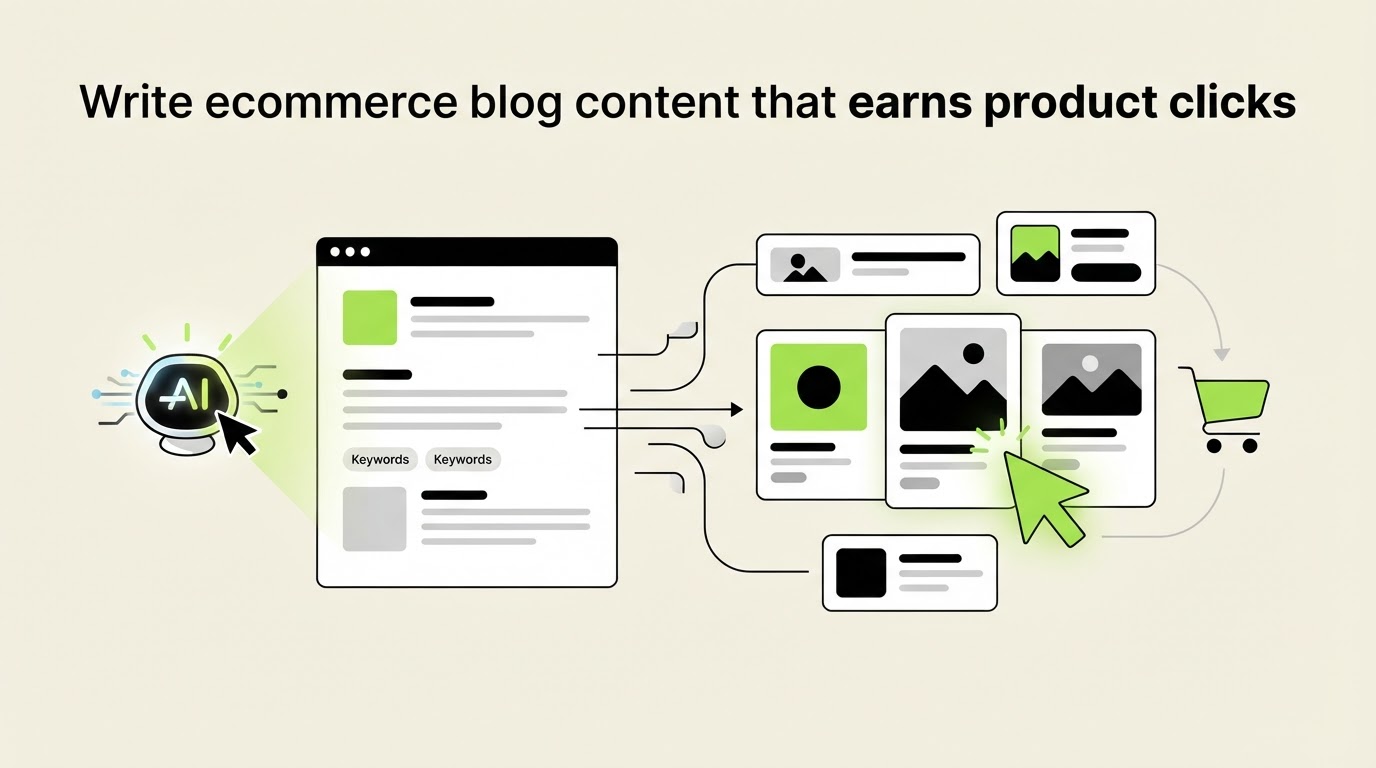
The strongest draft answers the shopper's question before it sells. Give criteria, explain trade-offs, and show how a reader can make a choice. Product and category links then function as useful next actions.
In the daypack article, start with the recommended capacity range for a full-day hike. Follow with factors that shift the answer: cold-weather layers, trail conditions, camera gear, food, and water capacity. A reader carrying three liters of water faces a different requirement from someone hiking near refill points.
Use the product catalog as evidence rather than decoration. If several daypacks include hydration sleeves, explain the practical benefit and state the capacity where product data supports it. If a pack uses a particular back-panel design, describe the intended comfort or ventilation use in plain language. Avoid broad superiority claims unless the store can substantiate them.
Add sections that are hard to obtain from generic writing alone. These can include packing diagrams, fit measurements, return-policy considerations, care advice from your support team, or a short comparison of your own collection filters. These details improve the page for shoppers and give AI assistants clearer, attributable facts when they retrieve and cite pages.
Use Google's product structured data documentation when checking product pages linked from the article. Accurate price, availability, and review markup can help Google understand eligible product information in search experiences.
Use Rankdesk with Shopify for research, review, and publishing
Teams can run the workflow manually with spreadsheets, documents, and Shopify drafts. Rankdesk removes much of the handoff work while keeping human review where ecommerce content carries real catalog and brand risk.
Start by choosing the Shopify site and the topic that supports the daypacks collection. Rankdesk researches the site, relevant keywords, and competing search results to give the brief a grounded starting point. The team can then set the target URL, shopper intent, required product facts, and internal-link destinations.
Next, generate the article draft and review it in the editor. Check the capacity guidance against the merchandising team's source data, replace generic language with catalog-specific details, and confirm each collection or product URL. Editors should also check title tags, headings, introductory answer, and image alt text before publication.
When the article is approved, publish it through the Rankdesk Shopify integration or keep it in review until the collection launch date. The integration matters because the final page needs the same accurate links, headings, and formatting that the editorial team approved.
After publication, monitor the article's search queries and refine it when a query signals a missing section. A rising query around “daypack water capacity,” for example, could justify a new H2 and a better-positioned collection link. Rankdesk's SEO for ecommerce resources can help teams connect this work to a repeatable content plan.
For content that also aims to become a useful source in AI-driven results, review Rankdesk's guide to getting mentioned by ChatGPT. Clear entities, original product expertise, cited facts, and a well-linked site help make a page easier to retrieve and reference.
Review AI-generated ecommerce content before it reaches Shopify
Review is where an AI blog writer for ecommerce becomes dependable. Give ownership to people closest to the claims: merchandising for specifications, customer support for recurring objections, and SEO for search intent and internal linking.
Check every product-level statement against a current source. Confirm sizes, materials, compatibility, warranty language, certifications, availability, and any shipping or return details. Remove claims with no evidence. A draft can sound precise while relying on outdated or incomplete information.
Then test the shopper journey. Open every internal link, view the destination on mobile, and ask whether the linked collection contains enough choices to fulfill the promise made by the article. In the daypack example, linking “packs for a 10-mile hike” to a collection that includes only commuter bags would waste the reader's attention.
Finally, check overlap with existing articles. Two pages aimed at the same question can split internal authority and confuse editorial priorities. Consolidate duplicate angles or differentiate them by use case, experience level, season, or product category. Use the Automated SEO Content pre-publishing checklist as a final control before pushing a batch live.
Measure whether ecommerce blog content supports sales
Track more than rankings. A topic can rank well and still lead shoppers toward poor destinations. In Google Analytics, inspect organic entrances to the article, clicks from the article to collection and product pages, and the assisted path to purchase. In Search Console, watch impressions, clicks, and the queries that the page earns over time.
For the daypack guide, review whether visitors use the collection link after reading the capacity section. If they leave after that section, the article may need clearer next steps, better collection filters, or more useful product comparison information. If visitors reach the collection yet fail to engage, the landing page may require work rather than the blog post.
Refresh the guide when a new product line launches, a discontinued item appears in the copy, or search queries reveal a meaningful unanswered question. This turns the blog into a maintained shopping resource rather than a set of one-time publications.
FAQ about AI blog writers for ecommerce
Can an AI blog writer create product descriptions and blog posts from the same catalog?
It can support both tasks, though they need separate briefs and review standards. Product descriptions focus on verified specifications and purchase decisions. Blog posts answer broader questions and direct readers to the appropriate collection or product page. Keep a single source of truth for product data so claims remain consistent across both formats.
How many product links should an ecommerce blog post include?
Use enough links to help the reader take the next logical step. A focused guide often needs one main collection link and a small number of product links tied to specific scenarios. Each link should match the surrounding advice and lead to an available, relevant destination.
Will AI-written ecommerce blog content help with AI assistant citations?
Useful citations come from clear, reliable pages with distinct information. Publish accurate product expertise, answer narrow questions directly, use descriptive headings, and maintain links between guides, collections, and products. Google's guidance for AI features in Search confirms that standard SEO fundamentals remain relevant for content appearing in these experiences.
Should ecommerce teams publish drafts automatically?
Automatic publishing can suit low-risk, heavily controlled formats after a reliable approval process exists. Product-led editorial content benefits from a review gate because availability, specifications, and merchandising priorities change frequently. Start with reviewed publishing, document recurring edits, then automate only the steps your team has validated.
If you want a more consistent way to plan, write, and publish ecommerce content that leads shoppers to the right Shopify pages, see how Rankdesk works. It researches your site, competitors, and keywords, then creates articles and landing pages for review or automatic publishing.
Want articles like this on your site?
Rankdesk plans, writes and publishes SEO content for you. Start free and generate your first 3 articles.